Geology and Minerals
Canteen Kopje
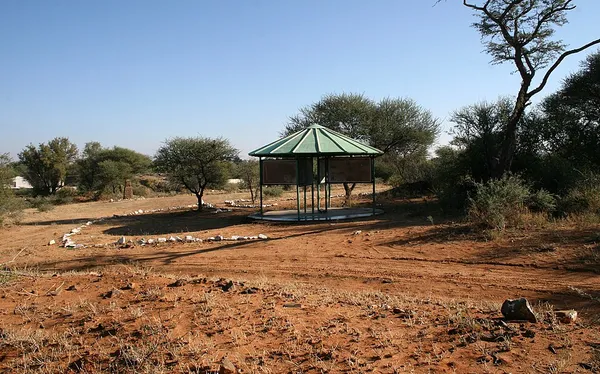
Canteen Kopje is an archaeological site, formally protected as a grade 2 provincial heritage site, and approved in 2017 for re-grading to national status, situated outside Barkly West in the Northern Cape, South Africa. The place was previously known as Klipdrift, meaning stony drift, a translation from a still earlier !Ora name, !a |aub. Canteen Kopje is best known for its long and exceptionally rich Earlier Stone Age sequence, spanning circa >0.5 to 1.7 million years, occurring within gravels exposed in late nineteenth and early twentieth century mining pits. Also attracting attention are more recent archaeological levels in the overlying Hutton Sands, which contain material known as Fauresmith, Middle Stone Age, Later Stone Age, and late Iron Age with evidence of protocolonial and colonial contact and interaction, probably, with nineteenth century diamond diggers. The importance of Canteen Kopje as a heritage site was recognized, and a 9 hectares (22 acres) area known as Erf 91 was proclaimed as a protected reserve in 1948. Gideon Retief, Mining Commissioner of Barkly West from 1942 to 1951, was instrumental in preserving the site and creating the first open air exhibit here. Subsequently, in 2000, information panels were erected by the McGregor Museum. These were refurbished in 2016. A walking trail was laid out for visitors to view the early diamond diggings and archaeological research sites. The Barkly West Museum contains further information and examples of artefacts from the site, while material excavated by archaeologists is housed principally by the McGregor Museum, the approved archaeological repository for the Northern Cape Province in nearby Kimberley. In 2016 the protected heritage site was directly threatened after the Department of Minerals and Energy issued a permit for part of the site to be mined. Although a heritage permit had not been issued by the South African Heritage Resources Agency, mining commenced on 18 March 2016.
Also on this shelf
Conglomerate (geology).
Carbon sequestration.
See also
Uncatalogued shelfText from Wikipedia; plate via Wikimedia Commons. Text CC BY-SA 4.0; plate freely licensed (see Commons). Source record. Images and catalogue data are reproduced from open-access collections.