Geology and Minerals
Hard water
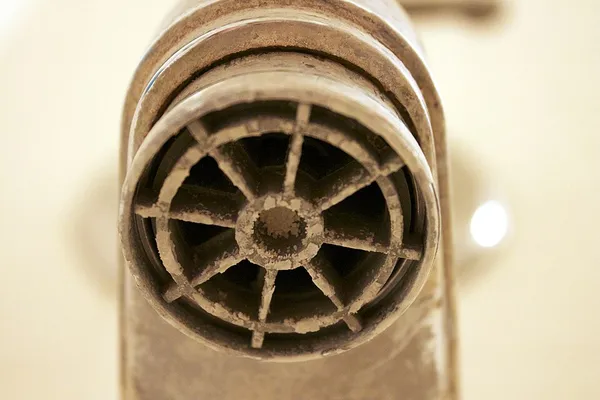
Hard water is water with a high mineral content (in contrast to "soft water"). Hard water is formed when water percolates through deposits of limestone, chalk or gypsum, which are largely made up of calcium and magnesium carbonates, bicarbonates and sulfates. Drinking hard water may have moderate health benefits due to the mineral content. It can pose critical problems in industrial settings, where water hardness is monitored to prevent limescaling in boilers, cooling towers, and other water-handling equipment. In domestic settings, hard water is often indicated by a lack of foam formation when soap is agitated in water, and by the formation of limescale in kettles and water heaters. Wherever water hardness is a concern, water softening is commonly used to reduce hard water's adverse effects.
Also on this shelf
Amboy Crater.
Borra Caves.
See also
Uncatalogued shelfText from Wikipedia; plate via Wikimedia Commons. Text CC BY-SA 4.0; plate freely licensed (see Commons). Source record. Images and catalogue data are reproduced from open-access collections.