Geology and Minerals
Earliest known life forms
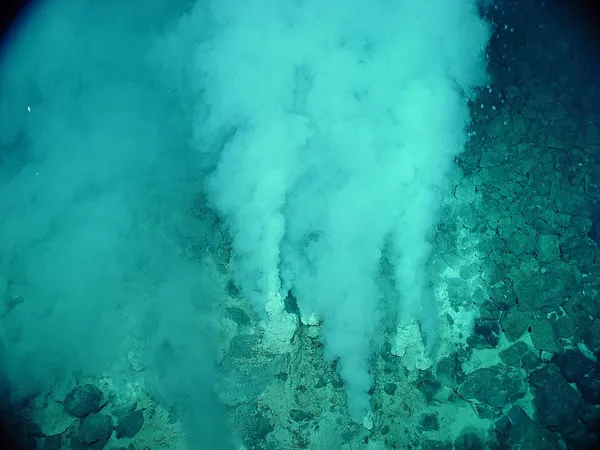
The earliest known life forms on Earth may be as old as 4.1 billion years (or Ga) according to biologically fractionated graphite inside a single zircon grain in the Jack Hills range of Australia. The earliest evidence of life found in a stratigraphic unit, not just a single mineral grain, is the 3.7 Ga metasedimentary rocks containing graphite from the Isua Supracrustal Belt in Greenland. The earliest, directly known life on Earth are stromatolite fossils which have been found in 3.480-billion-year-old geyserite uncovered in the Dresser Formation of the Pilbara Craton of Western Australia. Various microfossils of microorganisms have been found in 3.4 Ga rocks, including 3.465-billion-year-old Apex chert rocks from the same Australian craton region, and in 3.42 Ga hydrothermal vent precipitates from Barberton, South Africa. Much later in the geologic record, likely starting in 1.73 Ga, preserved molecular compounds of biologic origin are indicative of aerobic life. Therefore, the earliest time for the origin of life on Earth is at least 3.5 billion years ago and possibly as early as 4.1 billion years ago—not long after the oceans formed 4.5 billion years ago and after the formation of the Earth 4.54 billion years ago.
Also on this shelf
Cave research in India.
Depositional environment.
See also
Uncatalogued shelfText from Wikipedia; plate via Wikimedia Commons. Text CC BY-SA 4.0; plate freely licensed (see Commons). Source record. Images and catalogue data are reproduced from open-access collections.