Geology and Minerals
Eclogite
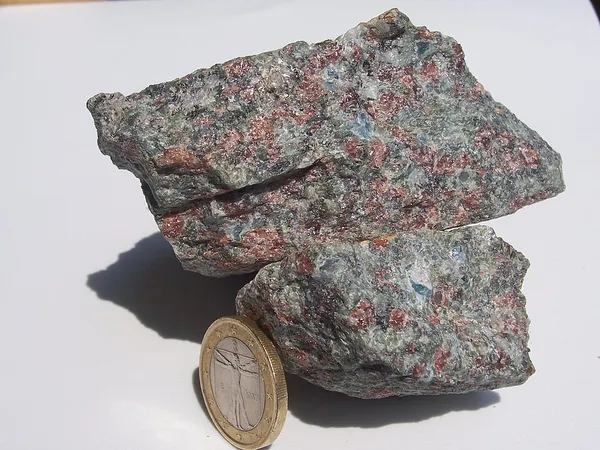
Eclogite ( ) is a metamorphic rock containing garnet (almandine-pyrope) hosted in a matrix of sodium-rich pyroxene (omphacite). Accessory minerals include kyanite, rutile, quartz, lawsonite, coesite, amphibole, phengite, paragonite, zoisite, dolomite, corundum and, rarely, diamond. The chemistry of primary and accessory minerals is used to classify three types of eclogite (A, B, and C). The broad range of eclogitic compositions has led to a longstanding debate on the origin of eclogite xenoliths as subducted, altered oceanic crust. The name eclogite is derived from the Ancient Greek word for 'choice' (εκλογή, eklogḗ), meaning 'chosen rock' on account of its perceived beauty. It was first named by René Just Haüy in 1822 in the second edition of his work Traité de minéralogie.
Also on this shelf
Cascades Volcano Observatory.
Chorochromatic map.
See also
Uncatalogued shelfText from Wikipedia; plate via Wikimedia Commons. Text CC BY-SA 4.0; plate freely licensed (see Commons). Source record. Images and catalogue data are reproduced from open-access collections.