Geology and Minerals
La Reforma (caldera)
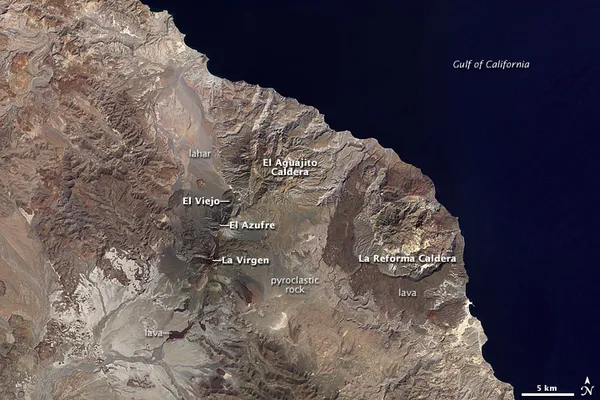
La Reforma is a Plio-Pleistocene caldera on the Baja California Peninsula in Mexico. It is part of eleven volcanoes in Baja California, which formed with the Gulf of California during the Miocene, about ten million years ago. Previously, a volcanic arc had existed on the peninsula. The caldera's basement consists of granites and monzonites, formed between the Cretaceous and the Middle Miocene. The caldera has a diameter of 10 kilometres (6.2 mi) and is surrounded by a rim 100 to 500 metres (330 to 1,640 ft) high; its highest point is 1,200 metres (3,900 ft) high above sea level. The formation of the caldera was accompanied by the eruption of a 5–10 cubic kilometres (1.2–2.4 cu mi) ignimbrite. After the eruption, volcanic activity continued in and around the caldera, forming lava domes, lava flows and a resurgent dome that rises 700 metres (2,300 ft) above the caldera margin. Other volcanoes in the area include El Aguajito and Tres Virgenes.
Also on this shelf
Fagradalsfjall.
Hokkaido Koma-ga-take.
See also
Uncatalogued shelfText from Wikipedia; plate via Wikimedia Commons. Text CC BY-SA 4.0; plate freely licensed (see Commons). Source record. Images and catalogue data are reproduced from open-access collections.