Geology and Minerals
Dinosaur Ridge
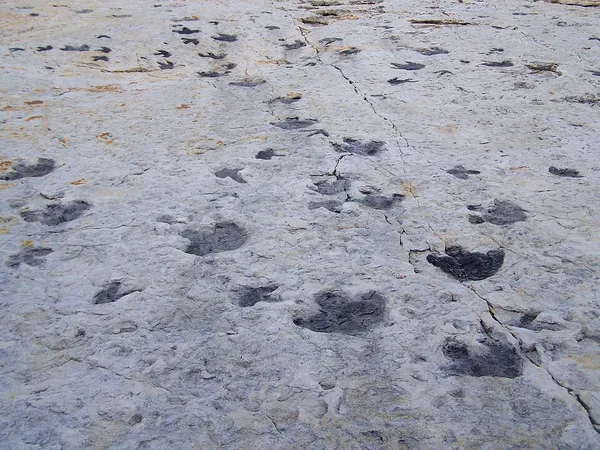
Dinosaur Ridge is a segment of the Dakota Hogback in the Morrison Fossil Area National Natural Landmark located in Jefferson County, Colorado, near the town of Morrison and just west of Denver. In 1877 Arthur Lakes, a clergyman, teacher, and amateur paleontologist from Golden, CO, and Henry Beckwith, a retired naval officer, discovered the first ever dinosaur material in the Morrison Formation at Dinosaur Ridge. The same year, excavation began under the direction of Yale paleontologist Dr. Othniel Charles Marsh. The first identified Stegosaurus fossils in the world were discovered here, and fossil bones found in the layers of rock here represent some well-known dinosaurs, including Apatosaurus, Camarasaurus, Diplodocus, and Allosaurus. In 1973, the area was recognized as an outstanding example of the nation's natural heritage, and was designated a National Natural Landmark by the National Park Service. The area was expanded in June 2011, and combined with another tracksite in Golden at the Parfet Prehistoric Preserve. These two sites, along with a few other nearby fossil sites in Golden, were combined, and the National Natural Landmark is now known as the Morrison-Golden Fossil Areas. In 1989, the Friends of Dinosaur Ridge non-profit was formed to address concerns regarding the preservation of the site and to offer educational programs on the area's resources. The rocks on the west side of Dinosaur Ridge are part of the widespread Morrison Formation of Jurassic age. It is in these rocks where Arthur Lakes discovered dinosaur bones in 1877. Subsequently, several quarries were excavated along the Dakota hogback in the Morrison area in search of more fossils. Evidence of a variety of dinosaur genera and species was found here, as well as fossils identified to be from prehistoric turtles and lungfish. Research is ongoing. The rocks on the east side of Dinosaur Ridge are part of the Cretaceous Dakota Formation. When Alameda Parkway was being constructed in 1937 (by the WPA) in order to provide access to Red Rocks Park and Amphitheatre, workers discovered dinosaur tracks. As those footprints were damaged and destroyed over time, more tracks were intentionally uncovered in later decades. These were found to include mostly Iguanodon-like footprints, perhaps from an ornithopod dinosaur called Eolambia.
Also on this shelf
Calderite.
Beaver Valley, Delaware and Pennsylvania.
See also
Uncatalogued shelfText from Wikipedia; plate via Wikimedia Commons. Text CC BY-SA 4.0; plate freely licensed (see Commons). Source record. Images and catalogue data are reproduced from open-access collections.