Geology and Minerals
Anthropocene
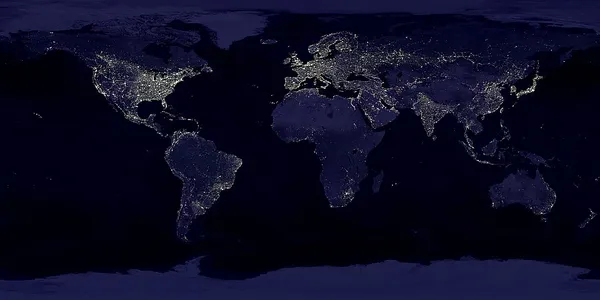
Anthropocene is a term that has been used to refer to the period of time during which humanity has become a planetary force of change. It appears in scientific social discourse, especially with respect to accelerating geophysical and biochemical changes that characterize the 20th and 21st centuries on Earth. Originally a proposal for a new geological epoch following the Holocene, it was rejected as such in 2024 by the International Commission on Stratigraphy (ICS) and the International Union of Geological Sciences (IUGS). The term has been used in sophisticated research relating to Earth's water and salt, geology, geomorphology, landscape, limnology, hydrology, ecosystems and climate. The effects of human activities on Earth can be seen, for example, in regards to biodiversity loss, and climate change. Various start dates for the Anthropocene have been proposed, ranging from the beginning of the Neolithic Revolution (12,000–15,000 years ago), to as recently as the 1960s. The biologist Eugene F. Stoermer is credited with first coining and using the term anthropocene informally in the 1980s; Paul J. Crutzen re-invented and popularized the term. The Anthropocene Working Group (AWG) of the Subcommission on Quaternary Stratigraphy (SQS) of the ICS voted in 2016 to proceed towards a formal golden spike (GSSP) proposal to define an Anthropocene epoch in the geologic time scale. Later that year, the group presented the proposal to the International Geological Congress. In 2019, the AWG voted in favour of submitting a formal proposal to the ICS by 2021. The proposal located potential stratigraphic markers to the mid-20th century. a post-World War II time period during which global population growth, economic growth, pollution and exploitation of natural resources have all increased at a dramatic rate.
Also on this shelf
Gore Mountain Garnet.
Geology of Russia.
See also
Uncatalogued shelfText from Wikipedia; plate via Wikimedia Commons. Text CC BY-SA 4.0; plate freely licensed (see Commons). Source record. Images and catalogue data are reproduced from open-access collections.