Botany
Agave
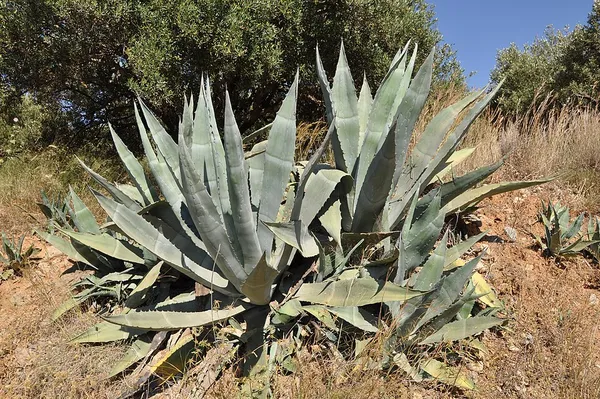
Agave (; also UK: ; Anglo-Hispanic, also US: ) is a genus of monocots native to the arid regions of the Americas. The genus is primarily known for its succulent and xerophytic species that typically form large rosettes of strong, fleshy leaves. Many plants in this genus may be considered perennial, because they require several to many years to mature and flower. However, most Agave species are more accurately described as monocarpic rosettes or multiannuals, since each individual rosette flowers only once and then dies; a small number of Agave species are polycarpic. Along with plants from the closely related genera Yucca, Hesperoyucca, and Hesperaloe, various Agave species are popular ornamental plants in hot, dry climates, as they require very little supplemental water to survive. Most Agave species grow very slowly. Some Agave species are known by the common name "century plant". Maguey is a Spanish word that refers to all of the large-leafed plants in the Asparagaceae family, including agaves and yuccas. Maguey flowers are eaten in many indigenous culinary traditions of Mesoamerica.
Also on this shelf
Gonocarpus.
Eriolaena.
See also
Uncatalogued shelfText from Wikipedia; plate via Wikimedia Commons. Text CC BY-SA 4.0; plate freely licensed (see Commons). Source record. Images and catalogue data are reproduced from open-access collections.