Botany
Commelina benghalensis
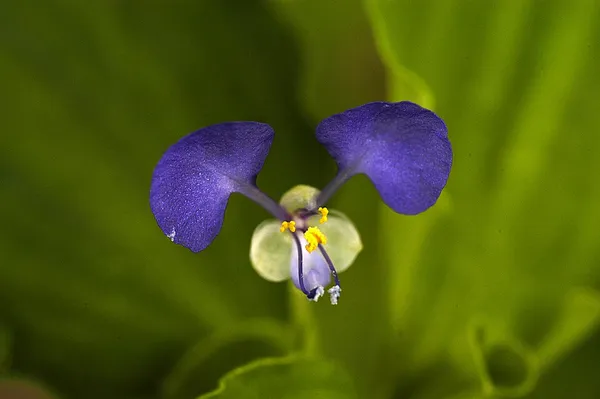
Commelina benghalensis, commonly known as the Benghal dayflower, tropical spiderwort, or wandering Jew, kanshira in Bengali, is a perennial herb native to tropical Asia and Africa. It has been widely introduced to areas outside its native range, including to the neotropics, Hawaii, the West Indies and to both coasts of North America. It has a long flowering period, from spring to fall in subtropical areas, and throughout the year closer to the equator. It is often associated with disturbed soils. In both its native range and areas where it has been introduced it is usually considered a weed, sometimes a serious one. In the United States it has been placed on the Federal Noxious Weed List. It is considered a moderate weed of rice cultivation in Asia. In its native range of sub-Saharan Africa, India, Sri Lanka, and much of Southeast Asia, it is considered a serious weed of an enormous range of crops from tea and coffee to cassava and peanuts. Additional agricultural damage is caused by the fact that it can host the nematode Meloidogyne incognita and the Groundnut rosette virus. In China it is used as a medicinal herb that is said to have diuretic, febrifugal and anti-inflammatory effects, while in Pakistan it is used to cure swellings of the skin, leprosy and as a laxative.
Also on this shelf
Goodenia brendannarum.
Anthurium hookeri.
See also
Uncatalogued shelfText from Wikipedia; plate via Wikimedia Commons. Text CC BY-SA 4.0; plate freely licensed (see Commons). Source record. Images and catalogue data are reproduced from open-access collections.