Botany
Caryophyllales
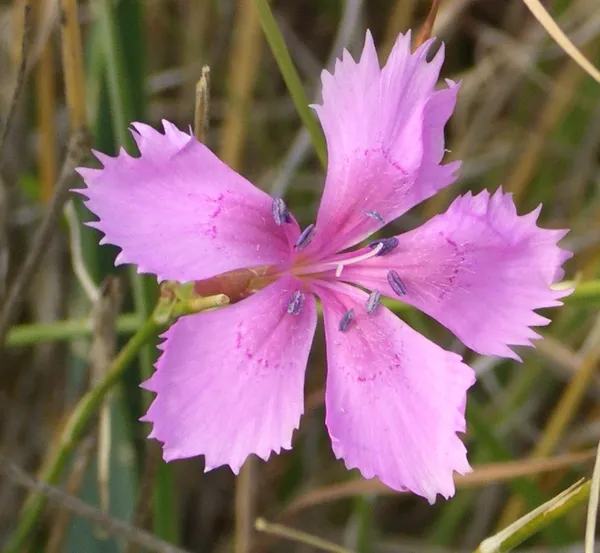
Caryophyllales ( KARR-ee-oh-fih-LAY-leez) is a diverse and heterogeneous order of flowering plants which includes well-known species such as cacti, carnations, beets, quinoa, spinach, amaranths, pigfaces and ice plants, oraches and saltbushes, goosefoots, sundews, Venus flytrap, tropical pitcher plants, Malabar spinach, bougainvilleas, four o'clock flowers, buckwheat, knotweeds, rhubarb, sorrels, purslanes, jojoba, and tamarisks. Many members are succulent, having fleshy stems or leaves. The production of betalain pigments is unique to members of this order, occurring in all core families – except Caryophyllaceae and Molluginaceae. Non-core families – such as the Nepenthaceae – produce anthocyanins. In its modern definition, the order encompasses an entirely new group of plant families – formerly included in the order Polygonales which do not synthesize betalains – among which several families are carnivorous, including Nepenthaceae and Droseraceae. According to calculations made using the molecular clock method, the lineage which led Caryophyllales to split from other plants occurred around 111 million years ago.
Also on this shelf
Boopis.
Kirkia.
See also
Uncatalogued shelfText from Wikipedia; plate via Wikimedia Commons. Text CC BY-SA 4.0; plate freely licensed (see Commons). Source record. Images and catalogue data are reproduced from open-access collections.