Botany
Cuscuta
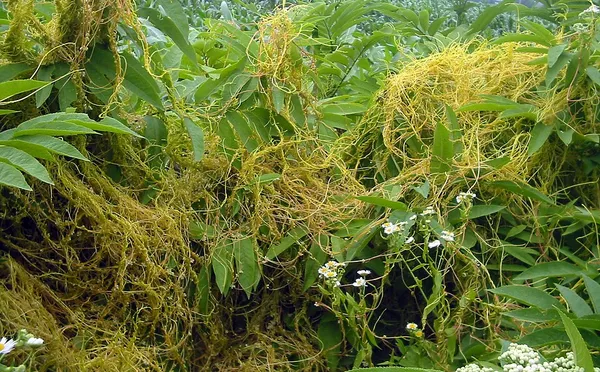
Cuscuta (), commonly known as dodder or amarbel, is a genus of over 201 species of yellow, orange, or red (rarely green) parasitic plants. The genus possess minimal chlorophyll and utilize haustoria to extract nutrient and water from host's vascular system. Formerly treated as the only genus in the family Cuscutaceae, it now is accepted as belonging in the morning glory family, Convolvulaceae, on the basis of the work of the Angiosperm Phylogeny Group. The genus is found throughout the temperate and tropical regions of the world, with the greatest species diversity in subtropical and tropical regions. Seedlings locate host plants by sensing volatile organic compounds. Many species are considered noxious weeds that are harmful to agriculture, and some are valued in traditional medicine. Folk names include strangle tare, strangleweed, scaldweed, beggarweed, lady's laces, fireweed, wizard's net, devil's guts, devil's hair, devil's ringlet, goldthread, hailweed, hairweed, hellbine, love vine, pull-down, angel hair, and witch's hair.
Also on this shelf
Bidens laevis.
Anemone caroliniana.
See also
Uncatalogued shelfText from Wikipedia; plate via Wikimedia Commons. Text CC BY-SA 4.0; plate freely licensed (see Commons). Source record. Images and catalogue data are reproduced from open-access collections.