Astronomy and Space
Hurricane Milton
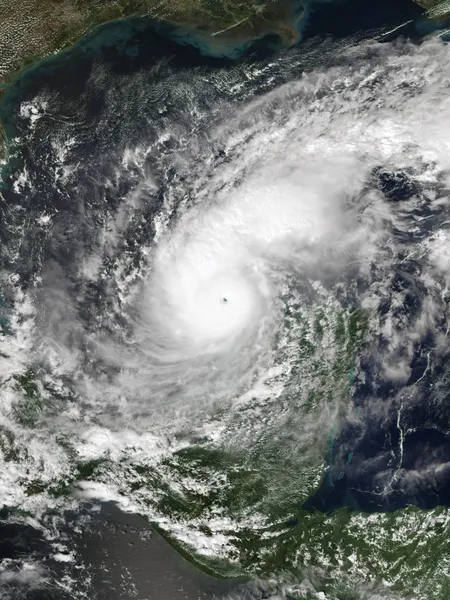
Hurricane Milton was an extremely powerful and destructive tropical cyclone which caused major damage and fatalities in Florida in October 2024. It is tied with 2005's Hurricane Rita for the most intense Atlantic hurricane ever recorded in the Gulf of Mexico. Milton significantly impacted the west coast of the U.S. state of Florida, less than two weeks after Hurricane Helene devastated the state's Big Bend region; further exacerbating damage and hindering clean-up efforts in previously affected regions. The thirteenth named storm, ninth hurricane, fourth major hurricane, and second Category 5 hurricane of the extremely active 2024 Atlantic hurricane season, Milton was the strongest tropical cyclone to occur worldwide in 2024. The hurricane also spawned a deadly tornado outbreak in one of the most intense tropical cyclone-produced outbreaks recorded. Total damages as a result of Milton were estimated to be $34.3 billion (2024 USD), making it the ninth-costliest Atlantic hurricane on record. Milton formed from a complex of factors, beginning with a long-tracked tropical wave that moved off the coast of Africa in mid-September 2024. After reaching the western Caribbean Sea and interacting with a broad Central American gyre, it then consolidated in the Bay of Campeche and became a tropical depression on October 5, becoming a tropical storm shortly after. Gradual intensification occurred as it slowly moved eastward, becoming a hurricane early on October 7. Later that day, Milton underwent explosive intensification and became a Category 5 hurricane with winds of 180 mph (285 km/h). At peak intensity, it had a pressure of 895 millibars (26.43 inHg), making it, at the time, the fourth-most intense Atlantic hurricane on record, tying the pressure record in the Gulf of Mexico with Rita in 2005. Milton weakened to a Category 4 hurricane after an eyewall replacement cycle and reintensified into a Category 5 hurricane the following day. Increasing wind shear caused the hurricane to weaken as it turned northeast towards Florida, falling to Category 3 status before making landfall near Siesta Key late on October 9. Afterwards, Milton rapidly weakened as it moved across the state into the Atlantic Ocean. It became extratropical on October 10 as it became embedded within a frontal zone.
Also on this shelf
Cassiopeia (constellation).
1991.
See also
Uncatalogued shelfText from Wikipedia; plate via Wikimedia Commons. Text CC BY-SA 4.0; plate freely licensed (see Commons). Source record. Images and catalogue data are reproduced from open-access collections.