Astronomy and Space
G-force
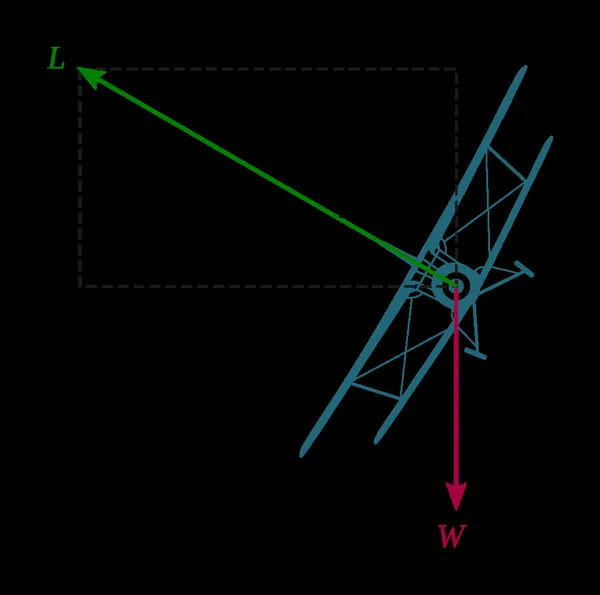
The g-force or gravitational force equivalent is a mass-specific force (force per unit mass), expressed in units of standard gravity (symbol g or g0, not to be confused with "g", the symbol for grams). It is used for sustained accelerations that cause a perception of weight. For example, an object at rest on Earth's surface is subject to 1 g, equaling the conventional value of gravitational acceleration on Earth, about 9.8 m/s2. More transient acceleration, accompanied with significant jerk, is called shock. When the g-force is produced by the surface of one object being pushed by the surface of another object, the reaction force to this push produces an equal and opposite force for every unit of each object's mass. The types of forces involved are transmitted through objects by interior mechanical stresses. Gravitational acceleration is one cause of an object's acceleration in relation to free fall. The g-force experienced by an object is due to the vector sum of all gravitational and non-gravitational forces acting on an object's freedom to move. In practice, as noted, these are surface-contact forces between objects. Such forces cause stresses and strains on objects, since they must be transmitted from an object surface. Because of these strains, large g-forces may be destructive. For example, a force of 1 g on an object sitting on the Earth's surface is caused by the mechanical force exerted in the upward direction by the ground, keeping the object from going into free fall. The upward contact force from the ground ensures that an object at rest on the Earth's surface is accelerating relative to the free-fall condition. (Free fall is the path that the object would follow when falling freely toward the Earth's center). Stress inside the object is ensured from the fact that the ground contact forces are transmitted only from the point of contact with the ground. Objects allowed to free-fall in an inertial trajectory, under the influence of gravitation only, feel no g-force – a condition known as weightlessness. Being in free fall in an inertial trajectory is colloquially called "zero-g", which is short for "zero g-force". Zero g-force conditions would occur inside an elevator falling freely toward the Earth's center (in vacuum), or (to good approximation) inside a spacecraft in Earth orbit.
Also on this shelf
Chang'e 2.
Chang'e 5.
See also
Uncatalogued shelfText from Wikipedia; plate via Wikimedia Commons. Text CC BY-SA 4.0; plate freely licensed (see Commons). Source record. Images and catalogue data are reproduced from open-access collections.