Astronomy and Space
History of the United States Space Force
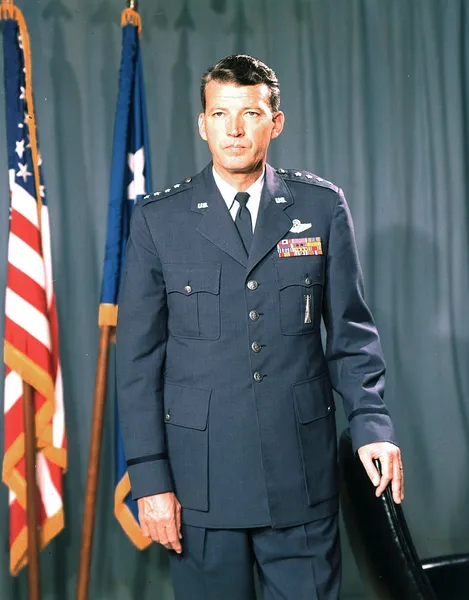
While the United States Space Force was established in December 2019, the history of the U.S. Department of Defense in space can be traced back to the aftermath of the Second World War. General Henry H. Arnold, chief of the United States Army Air Forces, identified space as a crucial military arena decades before the first spaceflight. The United States Air Force gained its independence from the Army on 18 September 1947. The Air Force began developing space and ballistic missile programs, while competing with the United States Army and United States Navy for space missions. In 1954, the Air Force created its first space organization, the Western Development Division, under the leadership of General Bernard Schriever. The Western Development Division and its successor organization, the Air Force Ballistic Missile Division, were instrumental in developing the first United States military launch vehicles and spacecraft, competing predominantly with the Army Ballistic Missile Agency under the leadership of General John Bruce Medaris and former German scientist Wernher von Braun. The launch of Sputnik 1 spurred a massive reorganization of military space and the 1958 establishment of the Advanced Research Projects Agency was a short-lived effort to centralized management of military space, with some fearing it would become a military service for space, with authorities being returned to the services in 1959. The establishment of NASA in 1958, however, completely decimated the Army Ballistic Missile Agency, resulting in the Air Force Ballistic Missile Division serving as the primary military space organization. In 1961, the Air Force was designated as the Department of Defense's executive agent for space and Air Research and Development Command was reorganized into Air Force Systems Command, with the Air Force Ballistic Missile Division being replaced by the Space Systems Division - the first Air Force division solely focused on space. In the 1960s, military space activities began to be operationalized, with Aerospace Defense Command taking control of missile warning and space surveillance on behalf of NORAD, Strategic Air Command assuming the weather reconnaissance mission, and Air Force Systems Command operating the first generations of communications satellites on behalf of the Defense Communications Agency.
Also on this shelf
HR 3159.
LunIR.
See also
Uncatalogued shelfText from Wikipedia; plate via Wikimedia Commons. Text CC BY-SA 4.0; plate freely licensed (see Commons). Source record. Images and catalogue data are reproduced from open-access collections.