Astronomy and Space
Field propulsion
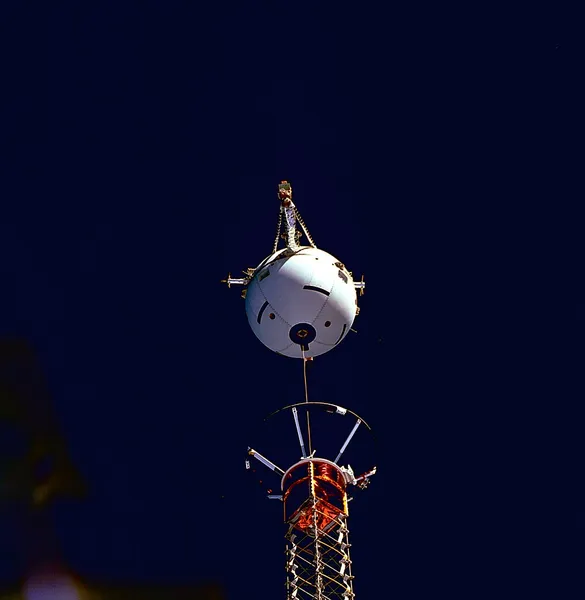
Field propulsion refers to spacecraft propulsion concepts in which thrust arises from interactions with external fields or ambient media, rather than primarily from onboard chemical propellant. Early ideas grew from studies of radiation pressure and electrically driven motion; later contractor and agency surveys organized advanced concepts under thermal, field, and photon headings. Several related propulsion systems discussed alongside field propulsion in the broader historical literature surveyed here have since been demonstrated in practice, including electrodynamic tethers in orbit, and applications such as EHD thrust devices. In narrower modern literature, related propellant-less propulsion discussions often focus on environment-coupled systems, while the historical contractor and survey literature treated field propulsion more broadly and sometimes grouped related terrestrial electromagnetic propulsion and some beamed-energy concepts within the same analytical framework. Related research has also examined beamed-energy propulsion, in which lasers, microwaves, or particle beams transmit power to a vehicle from a remote source, and more speculative proposals involving spacetime curvature. NASA's Breakthrough Propulsion Physics Program helped reframe the subject around conservation-law consistency, identifiable coupling mechanisms, and experimental reproducibility. Any claimed propulsion method that produces net thrust in a closed system without external interaction would violate conservation of momentum, which follows from the spatial translation symmetry of physical law as expressed by Noether's theorem. Field propulsion concepts have appeared extensively in science fiction, in many cases predating or paralleling the technical research. The influence has occasionally been direct: physicist Miguel Alcubierre said that his warp metric was inspired by Star Trek terminology.
Also on this shelf
BY Draconis.
BD Phoenicis.
See also
Uncatalogued shelfText from Wikipedia; plate via Wikimedia Commons. Text CC BY-SA 4.0; plate freely licensed (see Commons). Source record. Images and catalogue data are reproduced from open-access collections.