Astronomy and Space
Kosmos 60
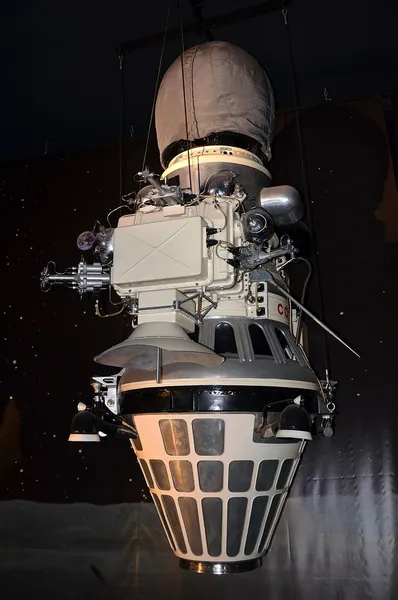
Kosmos 60 (Russian: Космос 60 meaning Cosmos 60) was an E-6 No.9 probe (Ye-6 series), launched by the Soviet Union. It was the sixth attempt at a lunar soft-landing mission, with a design similar to that of Luna 4. Kosmos 60 was launched by a Molniya 8K78 rocket, serial number G15000-24, flying from Site 1/5 at the Baikonur Cosmodrome. The launch took place at 09:25:31 GMT. The spacecraft achieved a low Earth orbit, with a perigee of 195 kilometres (121 mi), an apogee of 248 kilometres (154 mi), an inclination of 64.7°, and an orbital period of 89.1 minutes, but failed to leave orbit for its journey to the Moon due to a failure when the Blok L upper stage failed to fire for the trans-lunar injection burn. Instead, the spacecraft remained stranded in Earth orbit. A later investigation indicated that there might have been a short circuit in the electric converter within the control system of the spacecraft (which also controlled the Blok L stage) preventing engine ignition. It had an on-orbit mass of 1,470 kilograms (3,240 lb). The satellite reentered the Earth's atmosphere on 17 March 1965. Kosmos 60 carried two instruments: an imaging system and the SBM-10 radiation detector.
Also on this shelf
307261 Máni.
Cosmology.
See also
Uncatalogued shelfText from Wikipedia; plate via Wikimedia Commons. Text CC BY-SA 4.0; plate freely licensed (see Commons). Source record. Images and catalogue data are reproduced from open-access collections.