Astronomy and Space
GOES-17
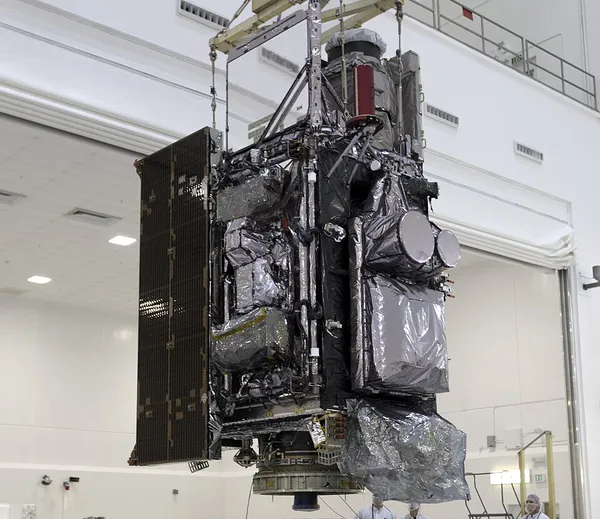
GOES-17 (designated pre-launch as GOES-S) is an environmental satellite operated by the National Oceanic and Atmospheric Administration (NOAA). The satellite is second in the four-satellite GOES-R series (GOES-16, -17, -18, and -19). GOES-17 supports the Geostationary Operational Environmental Satellite (GOES) system, providing multi-spectral imaging for weather forecasts and meteorological and environmental research. The satellite was built by Lockheed Martin, based on the A2100A platform, and expected to have a useful life of 15 years (10 years operational after five years of standby as an on-orbit replacement). GOES-17 is intended to deliver high-resolution visible and infrared imagery and lightning observations of more than half the globe. The satellite was launched on 1 March 2018 and reached geostationary orbit on 12 March 2018. In May 2018, during the satellite's testing phase after launch, a problem was discovered with its primary instrument, the Advanced Baseline Imager (see Malfunctions, below). GOES-17 became operational as GOES-West on 12 February 2019. In June 2021, NOAA announced that due to the cooling problem with the satellite's main imager, GOES-T would replace the GOES-17 in an operational role "as soon as possible". GOES-T launched on March 1, 2022.
Also on this shelf
BepiColombo.
Firefly Aerospace Blue Ghost.
See also
Uncatalogued shelfText from Wikipedia; plate via Wikimedia Commons. Text CC BY-SA 4.0; plate freely licensed (see Commons). Source record. Images and catalogue data are reproduced from open-access collections.