Astronomy and Space
Chinese constellations
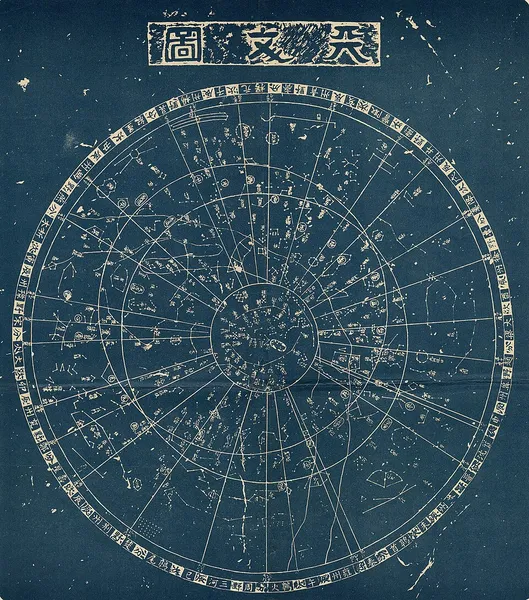
Traditional Chinese astronomy has a system of dividing the celestial sphere into asterisms or constellations, known as "officials" (Chinese: 星官; pinyin: xīng guān). The Chinese asterisms are generally smaller than the constellations of Hellenistic tradition. The Song dynasty (13th-century) Suzhou planisphere shows a total of 283 asterisms, comprising a total of 1,565 individual stars. The asterisms are divided into four groups, the Twenty-Eight Mansions (二十八宿; Èrshíbā Xiù) along the ecliptic, and the Three Enclosures of the northern sky. The southern sky was added as a fifth group in the late Ming dynasty based on European star charts, comprising an additional 23 asterisms. The Three Enclosures (三垣; Sān Yuán) include the Purple Forbidden Enclosure, which is centered on the north celestial pole and includes those stars which could be seen year-round, while the other two straddle the celestial equator. The Twenty-Eight Mansions form an ecliptic coordinate system used for those stars visible (from China) but not during the whole year, based on the movement of the Moon over a lunar month.
Also on this shelf
Hall-effect thruster.
Australian Space Agency.
See also
Uncatalogued shelfText from Wikipedia; plate via Wikimedia Commons. Text CC BY-SA 4.0; plate freely licensed (see Commons). Source record. Images and catalogue data are reproduced from open-access collections.