Astronomy and Space
Deep space exploration
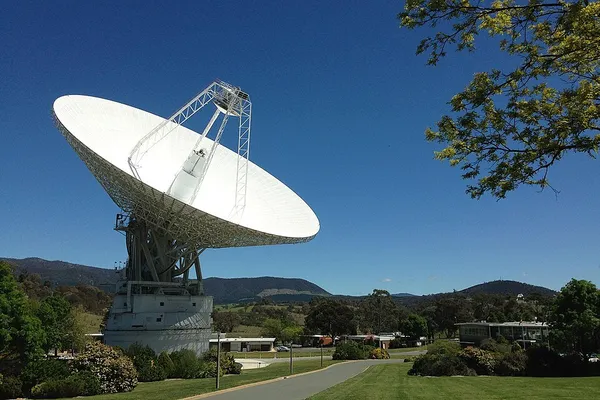
Deep space exploration is the branch of astronomy, astronautics, and space technology that is involved with exploring the distant regions of outer space. However, little consensus has been reached on the meaning of "distant" regions. In some contexts, it is used to refer to interstellar space. The International Telecommunication Union defines deep space to start at a distance of 2 million km (1.2 million mi) (about 0.01 AU) from Earth's surface. NASA's Deep Space Network has variously used criteria of 16,000–32,000 km (10,000–20,000 mi) from Earth. Physical exploration of space is conducted both by human spaceflights (deep-space astronautics) and by robotic spacecraft. At present the farthest space probe humankind has constructed and launched from Earth is Voyager 1, which was announced on December 5, 2011, to have reached the outer edge of the Solar System, and entered interstellar space on August 25, 2012. Deep space exploration further than this vessel's capacity is not yet possible due to limitations in the propulsion technology currently available. Some of the best candidates for future deep space engine technologies include nuclear fusion propulsion, laser/maser propulsion, and antimatter. The latter, beamed propulsion, appears to be the best candidate for deep space exploration presently available, since it uses known physics and known technology that is being developed for other purposes.
Also on this shelf
2069 Alpha Centauri mission.
Indian Mars exploration missions.
See also
Uncatalogued shelfText from Wikipedia; plate via Wikimedia Commons. Text CC BY-SA 4.0; plate freely licensed (see Commons). Source record. Images and catalogue data are reproduced from open-access collections.