Astronomy and Space
Astronomical filter
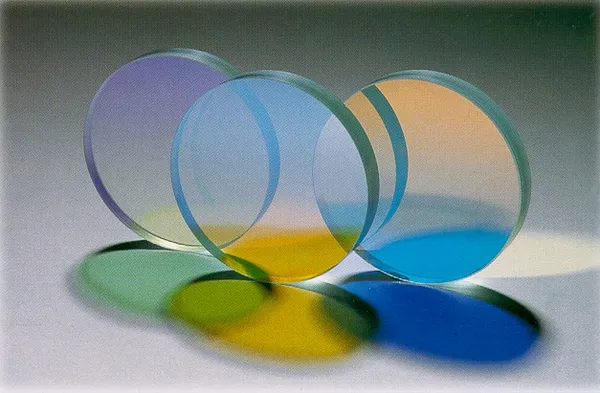
An astronomical filter is a telescope accessory consisting of an optical filter used by amateur astronomers to improve the details and contrast of celestial objects, either for viewing or for astrophotography. Research astronomers, on the other hand, use various band-pass filters for photometry on telescopes, in order to obtain measurements which reveal objects' astrophysical properties, such as stellar classification and placement of a celestial body on its Wien curve. Most astronomical filters work by blocking a specific part of the color spectrum above and below a bandpass, significantly increasing the signal-to-noise ratio of the interesting wavelengths, and so making the object gain detail and contrast. While the color filters transmit certain colors from the spectrum and are usually used for observation of the planets and the Moon, the polarizing filters work by adjusting the brightness, and are usually used for the Moon. The broad-band and narrow-band filters transmit the wavelengths that are emitted by the nebulae (by the hydrogen and oxygen atoms), and are frequently used for reducing the effects of light pollution. Filters have been used in astronomy at least since the solar eclipse of May 12, 1706.
Also on this shelf
Delta Pavonis.
31 Crateris.
See also
Uncatalogued shelfText from Wikipedia; plate via Wikimedia Commons. Text CC BY-SA 4.0; plate freely licensed (see Commons). Source record. Images and catalogue data are reproduced from open-access collections.