Astronomy and Space
Kordylewski cloud
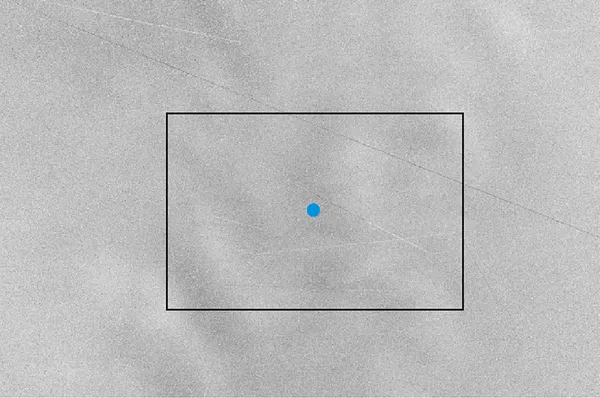
The Kordylewski clouds, sometimes called the lunar libration clouds, are sparse clouds of cosmic dust that trail ahead and behind the Moon. They sit at the L4 and L5 Lagrange points, two theoretically stable regions of space in the Earth–Moon system. Their relative stability inspired Polish astronomer Kazimierz Kordylewski to search their vicinity for co-orbital objects of the Moon. He first spotted the clouds in 1961 from the Tatra Mountains in former Czechoslovakia. Following Kordylewski's discovery, inconsistent observations by other astronomers led to the clouds' existence becoming controversial. Observation attempts were complicated by the clouds' exceedingly dim nature, making them difficult to discriminate against gegenschein and atmospheric airglow even in very dark skies. Observations from the ground, air, and space reported both positive and negative detections, and a 1991–92 encounter from Japan's Hiten spacecraft failed to find the clouds. In 2018, they were tentatively confirmed to exist via polarimetry, by a team of Hungarian astronomers of Eötvös Loránd University. Although the lunar L4 and L5 points are relatively stable, perturbations from the Sun are able to destabilize dust particles in the clouds. They are likely replenished by material from the interplanetary dust cloud as they are temporarily trapped in the lunar Lagrange points. Dust particles remain there for decades, forming large, rapidly-evolving bands within the clouds. Eventually, perturbations from the Sun lead to their escape back into interplanetary space. Due to their elusiveness they are sometimes nicknamed ghost moons.
Also on this shelf
Eta Cephei.
CASSIOPE.
See also
Uncatalogued shelfText from Wikipedia; plate via Wikimedia Commons. Text CC BY-SA 4.0; plate freely licensed (see Commons). Source record. Images and catalogue data are reproduced from open-access collections.