Astronomy and Space
2007 in spaceflight
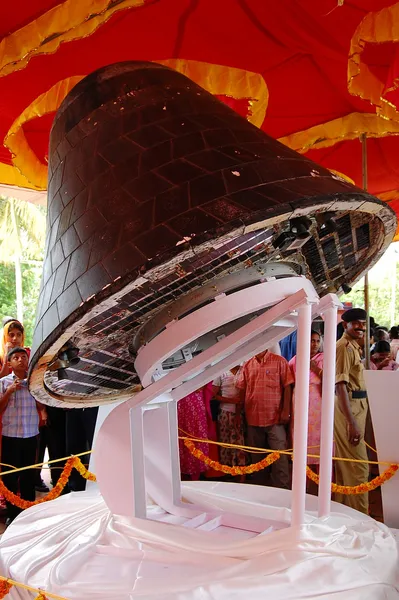
The year 2007 contained several significant events in spaceflight, including a Chinese ASAT test, the launches of the US Phoenix and Dawn missions to study Mars and Asteroid belt respectively, Japan's Kaguya Lunar orbiter, and the first Chinese Lunar probe, Chang'e 1. The internationally accepted definition of a spaceflight is any flight which crosses the Kármán line, 100 kilometres above sea level. The first recorded spaceflight launch of the year occurred on 10 January, when a PSLV, launched from the Satish Dhawan Space Centre, placed four spacecraft into low Earth orbit. One of these spacecraft was SRE-1, which returned to Earth twelve days later, in the first Indian attempt to recover a satellite after re-entry. Several carrier rockets made their maiden flights in 2007; the PSLV-CA, Long March 3B/E, Shavit-2, Zenit-2M, Proton-M Enhanced. These were all modernised or upgraded versions of existing systems. The RS-24 missile also conducted its first launch, and the Atlas V made its first flight in the 421 configuration. The first Colombian and Mauritian satellites, Libertad 1 and Rascom-QAF 1 respectively, were launched in 2007, although a helium leak reduced Rascom's operational lifetime by thirteen years.
Also on this shelf
HALCA.
Amateur astronomy.
See also
Uncatalogued shelfText from Wikipedia; plate via Wikimedia Commons. Text CC BY-SA 4.0; plate freely licensed (see Commons). Source record. Images and catalogue data are reproduced from open-access collections.