Astronomy and Space
HL-42 (spacecraft)
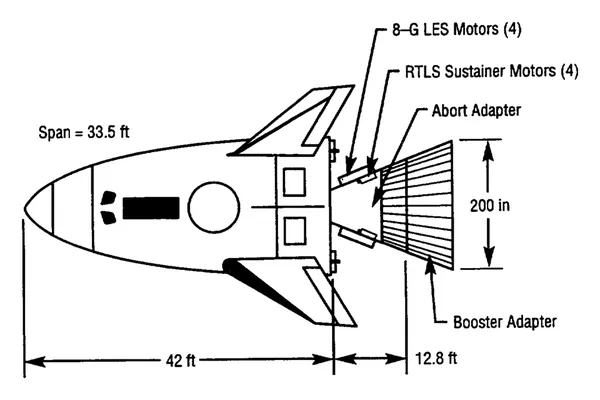
The HL-42 was a proposed scaled-up version of the HL-20 re-usable crewed spaceplane design, which had been developed from 1983 to 1991 at NASA's Langley Research Center but never flown. Like the HL-20 ("Horizontal Lander 20"), the HL-42 would have been launched into low Earth orbit mounted on top of a two-stage expendable rocket. At the end of the mission, it would have re-entered and glided to a runway landing. The HL-42 was suggested as one possible successor to the Space Shuttle in the 1994 NASA Access to Space Study. However, another alternative, a Single-stage-to-orbit design, was chosen for further development, and work on the HL-42 was abandoned.
Also on this shelf
Delta Herculis.
Glenn Research Center.
See also
Uncatalogued shelfText from Wikipedia; plate via Wikimedia Commons. Text CC BY-SA 4.0; plate freely licensed (see Commons). Source record. Images and catalogue data are reproduced from open-access collections.