Astronomy and Space
International Ultraviolet Explorer
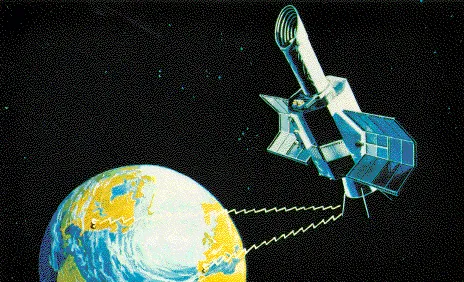
International Ultraviolet Explorer (IUE or Explorer 57, formerly SAS-D) was the first space observatory primarily designed to take ultraviolet (UV) spectra. The satellite was a collaborative project between NASA, the United Kingdom's Science and Engineering Research Council (SERC, formerly UKSRC) and the European Space Agency (ESA), formerly European Space Research Organisation (ESRO). The mission was first proposed in early 1964, by a group of scientists in the United Kingdom, and was launched on 26 January 1978, 17:36:00 UTC aboard a NASA Thor-Delta 2914 launch vehicle. The mission lifetime was initially set for 3 years, but in the end, it lasted 18 years, with the satellite being shut down in 1996. The switch-off occurred for financial reasons, while the telescope was still functioning at near original efficiency. It was the first space observatory to be operated in real-time by astronomers who visited the ground stations in the United States and Spain. Astronomers made over 104,000 observations using the IUE, of objects ranging from Solar System bodies to distant quasars. Among the significant scientific results from IUE data were the first large-scale studies of stellar winds, accurate measurements of the way interstellar dust absorbs light, and measurements of the supernova SN 1987A which showed that it defied stellar evolution theories as they then stood. When the mission ended, it was considered the most successful astronomical satellite ever.
Also on this shelf
Gravity and Extreme Magnetism Small Explorer.
Delta II.
See also
Uncatalogued shelfText from Wikipedia; plate via Wikimedia Commons. Text CC BY-SA 4.0; plate freely licensed (see Commons). Source record. Images and catalogue data are reproduced from open-access collections.