Astronomy and Space
Colorado Inner Radiation Belt Experiment
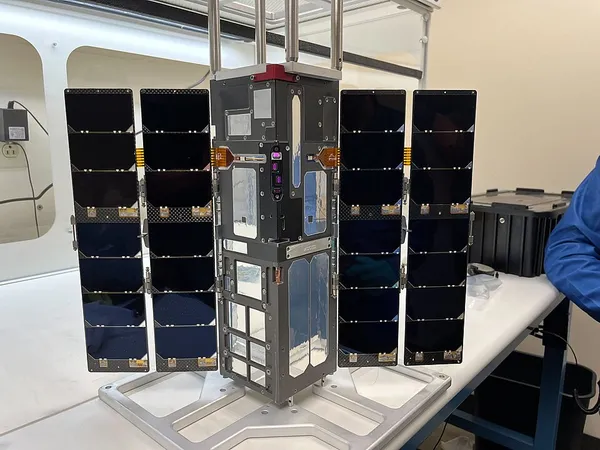
The Colorado Inner Radiation Belt Experiment (CIRBE) was a NASA sponsored CubeSat mission. The mission's science instrument REPTile-2 was designed and built by scientists, engineers, and students at the Laboratory for Atmospheric and Space Physics (LASP). The CIRBE mission was a joint effort by LASP and the Department of Aerospace Engineering Sciences at the University of Colorado Boulder. The mission principal investigator was Professor Xinlin Li with co-investigators Richard Selesnick, Rick Kohnert, and Scott Palo. It was the successor mission to the Colorado Student Space Weather Experiment. CIRBE launched on April 15, 2023, on a Falcon 9 rocket by SpaceX on Transporter-7 as part of NASA's CubeSat Launch Initiative (CSLI). The spacecraft began operations on April 19, 2023, and remained operational (except for a two-month period from April to June 2023) until it reentered on October 4, 2024. The CIRBE team has publicly released data products on the mission's website.
Also on this shelf
BRUIE.
Fermi Gamma-ray Space Telescope.
See also
Uncatalogued shelfText from Wikipedia; plate via Wikimedia Commons. Text CC BY-SA 4.0; plate freely licensed (see Commons). Source record. Images and catalogue data are reproduced from open-access collections.