Astronomy and Space
Astronomical object
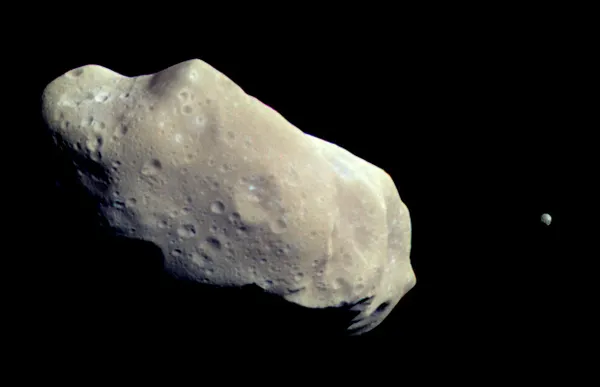
An astronomical object, celestial object, stellar object or heavenly object is a naturally occurring physical entity, association, or structure that exists within the universe. In astronomy, the terms object and body are often used interchangeably. However, an astronomical body, celestial body, or heavenly body is a single, tightly bound, contiguous physical object, while an astronomical or celestial object admits a more complex, less cohesively bound structure, which may consist of multiple bodies or even other objects with substructures. Some examples of astronomical objects include planetary systems, star clusters, nebulae, and galaxies, while asteroids, moons, planets, and stars are astronomical bodies. A comet may be identified as both a body and an object: It is a body in reference to the frozen nucleus of ice and dust, and an object in reference to the entire comet with its diffuse coma and tail.
Also on this shelf
Mars Reconnaissance Orbiter.
Expendable launch system.
See also
Uncatalogued shelfText from Wikipedia; plate via Wikimedia Commons. Text CC BY-SA 4.0; plate freely licensed (see Commons). Source record. Images and catalogue data are reproduced from open-access collections.