Astronomy and Space
Expendable launch system
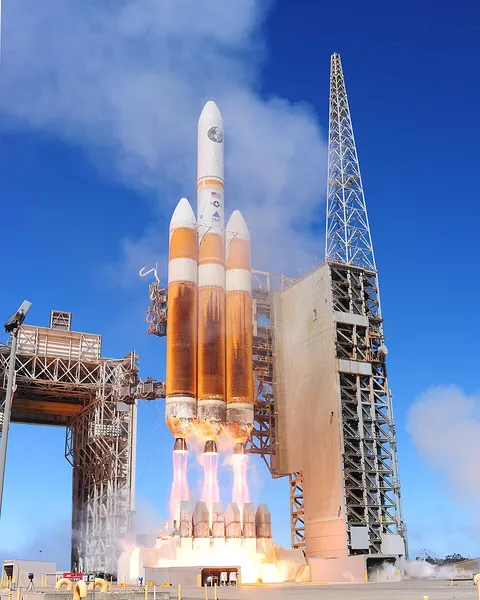
An expendable launch system (or expendable launch vehicle/ELV) is a launch vehicle that can be launched only once, after which its components are destroyed during reentry or impact with Earth, or discarded in space. ELVs typically consist of several rocket stages that are discarded sequentially as their fuel is exhausted and the vehicle gains altitude and speed. During the Space Race, all launch vehicles were expendable. Reusable launch vehicles (RLV), seeing early development with the Space Shuttle, gained prominence from the 2010s with the American private spaceflight vehicles Falcon 9, Falcon Heavy, and New Glenn. As of 2024, the ELV share of satellite and human spacecraft launches continues to shrink. There remain many instances where a ELV may still have a compelling use case over a reusable vehicle. ELVs are simpler in design than reusable launch systems and therefore may have a lower production cost. Furthermore, an ELV can use its entire fuel supply to accelerate its payload, offering greater payloads, and many RLVs operate expendable configurations for some launches. ELVs are a proven technology in widespread use for many decades. As of 2026, ELVs remain the most powerful operational rockets of the space programs of the US (Space Launch System), China (Long March 5), Europe (Ariane 6), Russia (Angara A5), and Japan (H3).
Also on this shelf
Ginga (satellite).
James Van Allen.
See also
Uncatalogued shelfText from Wikipedia; plate via Wikimedia Commons. Text CC BY-SA 4.0; plate freely licensed (see Commons). Source record. Images and catalogue data are reproduced from open-access collections.