Astronomy and Space
Future of Earth
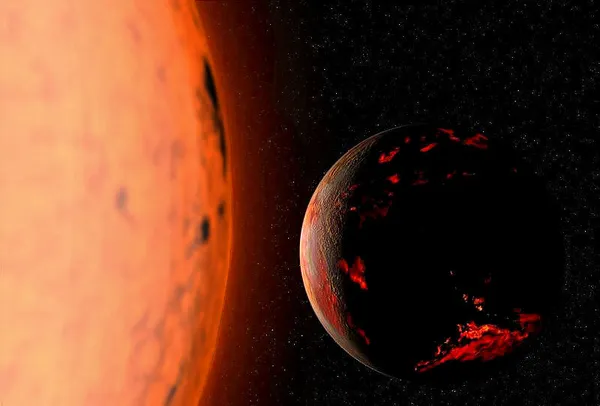
The biological and geological future of Earth can be extrapolated based on the estimated effects of several long-term influences. These include the chemistry at Earth's surface, the cooling rate of the planet's interior, gravitational interactions with other objects in the Solar System, and a steady increase in the Sun's luminosity. An uncertain factor is the influence of human technology such as climate engineering, which could cause significant changes to the planet. For example, the current Holocene extinction is being caused by technology, and the effects may last for up to five million years. In turn, technology may result in the extinction of humanity, leaving the planet to gradually return to a slower evolutionary pace resulting solely from long-term natural processes. Over time intervals of hundreds of millions of years, random celestial events pose a global risk to the biosphere, which can result in mass extinctions. These include impacts by comets or asteroids and the possibility of a near-Earth supernova—a massive stellar explosion within a 100-light-year (31-parsec) radius of the Sun. Other large-scale geological events are more predictable. Milankovitch's theory predicts that the planet will continue to undergo glacial periods at least until the Quaternary glaciation comes to an end. These periods are caused by the variations in eccentricity, axial tilt, and precession of Earth's rotation and orbit. As part of the ongoing supercontinent cycle, plate tectonics will probably create a supercontinent in 250–350 million years. Sometime in the next 1.5–4.5 billion years, Earth's axial tilt may begin to undergo chaotic variations, with changes in the axial tilt of up to 90°. The luminosity of the Sun will steadily increase, causing a rise in the solar radiation reaching Earth and resulting in a higher rate of weathering of silicate minerals. This will affect the carbonate–silicate cycle, which will reduce the level of carbon dioxide in the atmosphere. About 600 million years from now, the level of carbon dioxide will fall below the level needed to sustain C3 carbon fixation photosynthesis used by trees. Some plants use the C4 carbon fixation method to persist at carbon dioxide concentrations as low as ten parts per million. However, in the long term, plants will likely die off altogether.
Also on this shelf
Astronomical catalogue.
Beta Virginis.
See also
Uncatalogued shelfText from Wikipedia; plate via Wikimedia Commons. Text CC BY-SA 4.0; plate freely licensed (see Commons). Source record. Images and catalogue data are reproduced from open-access collections.