Astronomy and Space
Irregular moon
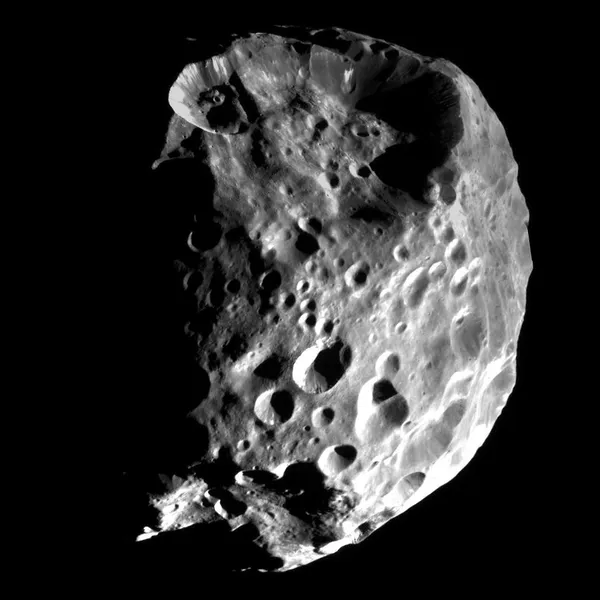
In astronomy, an irregular moon, irregular satellite, or irregular natural satellite is a natural satellite following an orbit that is irregular in some or all of the following ways: distant; inclined; highly elliptical; retrograde. They have often been captured from elsewhere by their parent planet, unlike regular satellites that formed in orbit around them. Irregular moons have a stable orbit, unlike temporary satellites which often have similarly irregular orbits but will eventually depart. The term does not refer to shape; Triton, for example, is a round moon but is considered irregular due to its orbit and origins. Given their great distances from their parent planet, the term outer moon may also be used interchangeably. However, the outermost large moons of a planet may also be called "outer moons", such as Iapetus, Oberon, or Callisto, which might cause confusion. Only the giant planets have irregular moons. As of April 2026, 383 irregular moons are known, orbiting all four of the outer planets (Jupiter, Saturn, Uranus, and Neptune). The largest of each planet are Himalia of Jupiter, Phoebe of Saturn, Sycorax of Uranus, and Triton of Neptune. Triton is rather unusual for an irregular moon; if it is excluded, then Nereid is the largest irregular moon around Neptune. It is currently thought that the irregular satellites were once independent objects orbiting the Sun before being captured by a nearby planet, early in the history of the Solar System.
Also on this shelf
DARPA Falcon Project.
Explorer 32.
See also
Uncatalogued shelfText from Wikipedia; plate via Wikimedia Commons. Text CC BY-SA 4.0; plate freely licensed (see Commons). Source record. Images and catalogue data are reproduced from open-access collections.