Astronomy and Space
Airglow
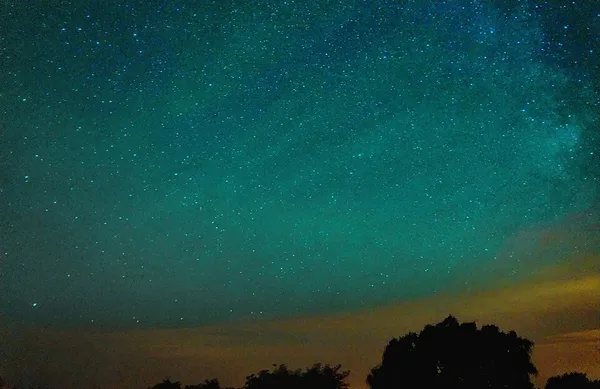
Airglow is a faint emission of light by a planetary atmosphere. In the case of Earth's atmosphere, this optical phenomenon causes the night sky never to be completely dark, even after the effects of starlight and diffused sunlight from the far side are removed. This phenomenon originates with self-illuminated gases and has no relationship with Earth's magnetism or sunspot activity, causing aurorae. Airglow occurs in two forms, as a result of a pair of interlinked but different processes. Dayglow occurs during the day and is caused by the splitting of atmospheric molecules but is too faint to be seen in daylight. During the night airglow occurs as nightglow, when the molecules which were split during daytime recombine.
Also on this shelf
Haolong (spacecraft).
Colonization of Mars.
See also
Uncatalogued shelfText from Wikipedia; plate via Wikimedia Commons. Text CC BY-SA 4.0; plate freely licensed (see Commons). Source record. Images and catalogue data are reproduced from open-access collections.