Astronomy and Space
Animals in space
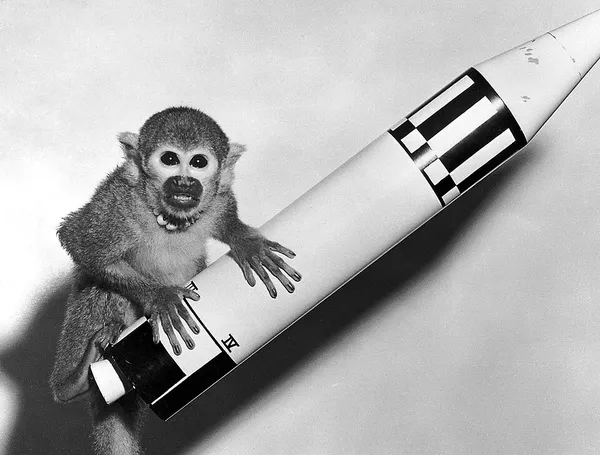
Animals in space originally served to test the survivability of spaceflight, before human spaceflights were attempted. Later, many species were flown to investigate various biological processes and the effects microgravity and space flight might have on them. Bioastronautics is an area of bioengineering research that spans the study and support of life in space. To date, seven national space programs have flown non-human animals into space: the United States, Soviet Union, France, Argentina, China, Japan and Iran. A wide variety of non-human animals have been launched into space, including monkeys and apes, dogs, cats, tortoises, mice, rats, rabbits, fish, frogs, spiders, insects, and quail eggs (which hatched on Mir in 1990). The US launched the first living beings into space, with fruit flies surviving a 1947 flight, followed by primates in 1949. The Soviet space program launched multiple dogs into space, with the first sub-orbital flights in 1951, and first orbital flights in 1957. Two tortoises and several varieties of plants were the first living beings to circle the Moon in September 1968 on the Zond 5 mission. In 1972, five mice nicknamed Fee, Fi, Fo, Fum, and Phooey orbited the Moon a record 75 times aboard command module America as part of the Apollo 17 mission.
Also on this shelf
Coma Star Cluster.
58 Andromedae.
See also
Uncatalogued shelfText from Wikipedia; plate via Wikimedia Commons. Text CC BY-SA 4.0; plate freely licensed (see Commons). Source record. Images and catalogue data are reproduced from open-access collections.