Astronomy and Space
Human spaceflight
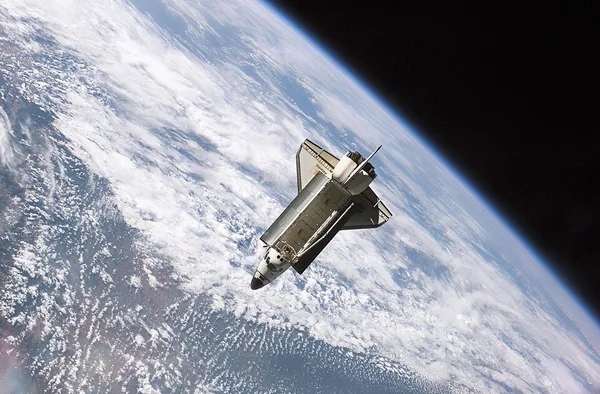
Human spaceflight (also referred to as crewed spaceflight, and historically as manned spaceflight) is spaceflight with a crew or passengers aboard a spacecraft, often with the spacecraft being operated directly by the onboard crew. Spacecraft can also be remotely operated from ground stations on Earth, or autonomously, without any direct human involvement. People trained for spaceflight are called astronauts (American or other), cosmonauts (Russian), or taikonauts (Chinese); and non-professionals are referred to as spaceflight participants or spacefarers. Humans have had a continuous presence in space since 2 November 2000, on the International Space Station (ISS). The first human in space was Soviet cosmonaut Yuri Gagarin, who launched as part of the Soviet Union's Vostok program on 12 April 1961 at the beginning of the Space Race. On 5 May 1961, Alan Shepard became the first American in space, as part of Project Mercury. On 20 July 1969, American astronaut Neil Armstrong landed on the Moon and became the first human on an extraterrestrial body. The United States' Apollo program executed six crewed lunar landings between 1969 and 1972. Since the final landing in 1972, the only time humans have traveled beyond low Earth orbit has been the Artemis II lunar flyby in 2026. The US Artemis program aims for new lunar landings in the late 2020s. Currently, the United States, Russia, and China are the only countries with public or commercial human spaceflight-capable programs. Non-governmental spaceflight companies have developed human space programs of their own, e.g. for space tourism and commercial in-space research. The first private human spaceflight launch was the suborbital flight of SpaceShipOne on June 21, 2004. The first commercial orbital crew launch was by SpaceX in May 2020, transporting NASA astronauts to the ISS under US government contract.
Also on this shelf
63 Cygni.
Eta Aquilae.
See also
Uncatalogued shelfText from Wikipedia; plate via Wikimedia Commons. Text CC BY-SA 4.0; plate freely licensed (see Commons). Source record. Images and catalogue data are reproduced from open-access collections.