Asian Art
Dakini
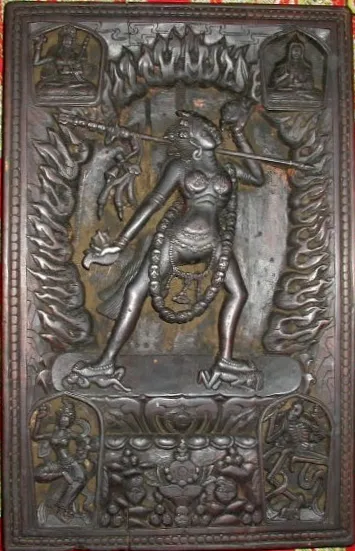
A dakini is a type of goddess in Hinduism and Buddhism. The concept of the dakini somewhat differs depending on the context and the tradition. For example, in earlier Hindu texts and East Asian esoteric Buddhism, the term denotes a race of demonesses who ate the flesh and vital essence of humans. In Hindu Tantric literature, Ḍākinī is the name of a goddess often associated with one of the six chakras or the seven fundamental elements (dhātu) of the human body. Meanwhile, in Nepalese and Tibetan Buddhism, dakini (or wisdom dakini) can refer to both what can be best described as fierce-looking female embodiments of enlightened energy, and to human women with a certain amount of spiritual development, both of whom can help Tantric initiates in attaining enlightenment. In Japan, the ḍākinīs – held in the East Asian Buddhist tradition to have been subjugated and converted to Buddhism by the buddha Vairocana under the guise of the god Mahākāla (Daikokuten in Japanese) – were eventually coalesced into a single deity called Dakiniten, who, after becoming syncretized with the native agricultural deity Inari, became linked to the fox (kitsune) iconography associated with the latter.
Also on this shelf
Fulper Pottery Company.
History of the Jews in Myanmar.
See also
Uncatalogued shelfText from Wikipedia; plate via Wikimedia Commons. Text CC BY-SA 4.0; plate freely licensed (see Commons). Source record. Images and catalogue data are reproduced from open-access collections.