Asian Art
History of India
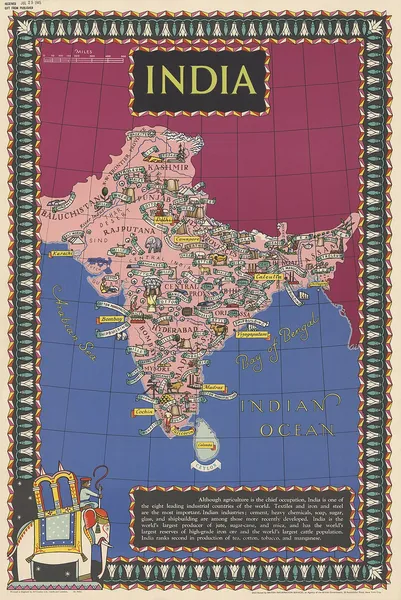
Anatomically modern humans are estimated to have first arrived on the Indian subcontinent between 73,000 and 55,000 years ago. The earliest known human remains in South Asia date to 30,000 years ago. Sedentariness began in South Asia around 7000 BCE; by 4500 BCE, settled life had spread, and gradually evolved into the Indus Valley Civilisation, one of three early cradles of civilisation in the Old World, which flourished between 2500 BCE and 1900 BCE in present-day Pakistan and northwestern India. Early in the second millennium BCE, persistent drought caused the population of the Indus Valley to scatter from large urban centres to villages. Around 1800 - 1500 BCE the Indo-Aryan tribes moved into the northwestern region of India, modern day Punjab from Central Asia in several waves of migration. The Vedic period of the Vedic people in northern India (1500–500 BCE) was marked by the composition of their extensive collections of hymns (Vedas). The social structure was loosely stratified via the varna system, incorporated into the highly evolved present-day Jāti system. The pastoral and nomadic Indo-Aryans spread from the Punjab into the Indo-Gangetic Plain. Around 600 BCE a second urbanisation occurred resulting in a new interregional culture; then, smaller janapadas (realms) were consolidated into mahājanapadas (great states). This period saw the rise of new ascetic movements and religious concepts, including the rise of Jainism, led by Pārśvanātha and Mahavira, and Buddhism formed by Buddha. The latter was synthesized with the preexisting religious cultures of South Asia, giving rise to Hinduism. Chandragupta Maurya overthrew the Nanda Empire and established the first great empire in ancient India, the Maurya Empire. India's Mauryan king Ashoka is widely recognised for the violent Kalinga War and his historical acceptance of Buddhism and his attempts to spread nonviolence and peace across his empire. This period marks the rapid dissemination of Śramaṇic religions. The Maurya Empire would collapse in 185 BCE, on the assassination of the then-emperor Brihadratha by his general Pushyamitra Shunga. The Shunga Empire in the northeast of the subcontinent would fracture into various smaller polities.
Also on this shelf
Brahma Jinalaya, Lakkundi.
Chinese Buddhism.
See also
Uncatalogued shelfText from Wikipedia; plate via Wikimedia Commons. Text CC BY-SA 4.0; plate freely licensed (see Commons). Source record. Images and catalogue data are reproduced from open-access collections.