Asian Art
Culture of the Ming dynasty
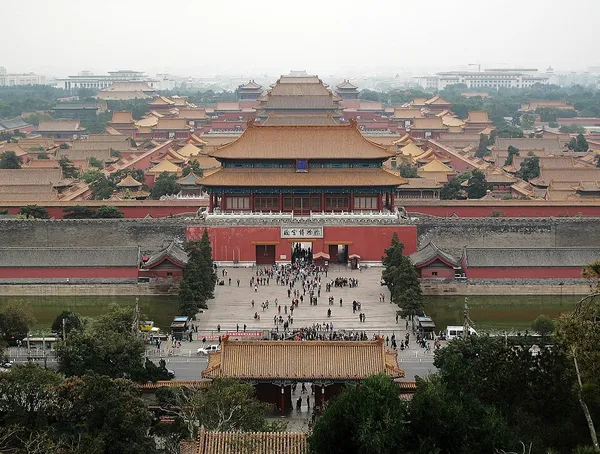
The Ming dynasty (1368–1644) of China was known for its advanced and cultured society. The culture of the Ming dynasty was deeply rooted in traditional Chinese values, but also saw a flourishing of fine arts, literature, and philosophy in the late 15th century. During this time, the government played a stronger role in shaping culture, requiring the use of Zhu Xi's interpretation of Neo-Confucianism in civil service examinations and promoting "proper" art in literature and painting. Despite this, some historians view the Ming era as a period of monotony and mediocrity. However, the Ming dynasty was actually a time of great creativity, particularly in its final century. Intellectuals of this time sought self-realization through anti-rationalist individualism, as seen in the teachings of Wang Yangming, and pursued wisdom through the cultivation of knowledge of one's own mind. During the early Ming period, painting and calligraphy were heavily influenced by past styles, particularly those of the Song dynasty, but were also transformed in a creative manner. The court painting academy, which was revived in the 1420s and 1430s, focused on the genre of "flowers and birds". This genre was dominated by renowned masters such as Bian Jingzhao (early 15th century) and Lin Liang (late 15th century). Meanwhile, landscape painting, which was more popular among independent artists, saw the rise of the Wu School led by founder Shen Zhou and the Zhe school, with Dai Jin as its most prominent representative. In the 16th century, there was a prevalence of imitating traditional techniques and subjects in painting. Lü Ji stood out in the "flowers and birds" genre for his mastery. Along with the aforementioned artists, Tang Yin, Wen Zhengming, and others also gained recognition during the Ming period. One of the defining characteristics of this period was the fusion of painting and calligraphy, with works from the 15th century onwards containing an equal balance of both art forms. During the late 14th and early 15th centuries, there was a prevalent tendency among literary and journalistic works to imitate old patterns. This was particularly evident in the works of the "adherents of old literature", such as Song Lian, Liu Ji, Yang Shiqi, and other politicians and scholars.
Also on this shelf
Buddhist coin charm.
Craquelure.
See also
Uncatalogued shelfText from Wikipedia; plate via Wikimedia Commons. Text CC BY-SA 4.0; plate freely licensed (see Commons). Source record. Images and catalogue data are reproduced from open-access collections.