Asian Art
History of Thailand
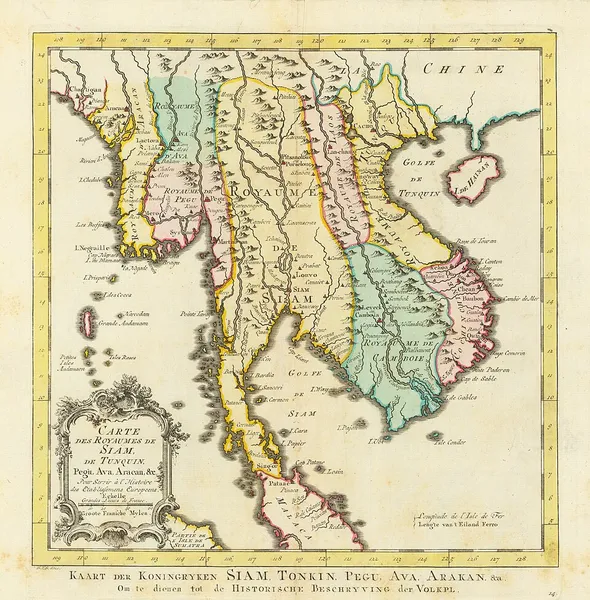
The history of Thailand begins with Bronze and Iron Age sites such as Ban Chiang, occupied by about 1500 BCE. In the first millennium the region was held by Mon, Lawa, Khmer and Malay communities. Kra-Dai-speaking Tai groups moved from South China into Mainland Southeast Asia between the 8th and 10th centuries, and in greater numbers in the 13th under pressure from the Mongol armies in China. They settled in the north and in central city-states such as Lavo, mixed with the existing population, and took up the Dvaravati culture of the Chao Phraya Basin. In Northern Thailand, the oldest region, the main ethnic group, the Tai-Yuan, founded kingdoms of their own, the semi-legendary Singhanavati (691 BCE–638 CE) and then Ngoenyang (638–1292). Sukhothai was taken in 1238 and became the capital of the Sukhothai Kingdom (1238–1438), which by the 13th century had replaced the Mon kingdoms in Central Thailand; how far the town had stood under Angkorian authority before that, and how the events of 1238 should be read, are both disputed. Suphannabhum princes separated Lavo from the Khmer Empire. Under Ramkhamhaeng the Thai script was created in 1283, the arts flourished, Thai institutions took shape, and the people called themselves Thai as those free of foreign rule. In 1351 the Suphannabhum city-state, modern Suphan Buri, and Lavo, modern Lop Buri, merged into the Ayutthaya Kingdom on the Chao Phraya River, joining Tai-Yuan of the north with Monic people of the basin. Duarte Fernandes reached Ayutthaya in 1511, the first European to do so. Its government was at first bilingual in Thai and Khmer, but Thai became the lingua franca after the Fall of Angkor in 1431 and the conquest of Sukhothai in 1438. Siam and Burma fought 26 wars between the 16th and the early 19th century. Ayutthaya fell when its capital was sacked in the Burmese–Siamese War (1765–1767). Taksin drove out the Burmese, reunified the five warring regional states and founded the short-lived Thonburi Kingdom in 1767. He was deposed by his commander Chao Phraya Chakri, who founded the Rattanakosin Kingdom (1782–1932); at its greatest extent in 1805–1812 it took in 25 polities, among them modern Cambodia, Laos, northern Malaysia and eastern Burma. King Mongkut (Rama IV) took up Western innovations and began the modernization of the country.
Also on this shelf
Bangladesh Navy.
Beijing.
See also
Uncatalogued shelfText from Wikipedia; plate via Wikimedia Commons. Text CC BY-SA 4.0; plate freely licensed (see Commons). Source record. Images and catalogue data are reproduced from open-access collections.