Asian Art
German Empire
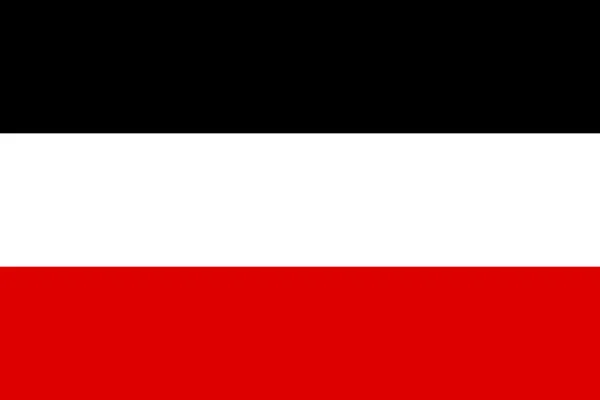
The German Empire (German: Deutsches Reich), also referred to as Imperial Germany or the Second Reich, was the period of the German Reich from the unification of Germany in 1871 until the November Revolution in 1918, when Germany changed its form of government to a republic. The German Empire consisted of 25 states, each with its own nobility: four constituent kingdoms, six grand duchies, five duchies (six before 1876), seven principalities, three free Hanseatic cities, and one imperial territory. While Prussia was only one of the four kingdoms in the realm, it contained about two-thirds of the Empire's population and territory, and Prussian dominance was also constitutionally established, since the king of Prussia was also the German Emperor (Deutscher Kaiser). The empire was founded on 18 January 1871, when the south German states, except for Austria, Switzerland and Liechtenstein, joined the North German Confederation. The new constitution came into force on 16 April, changing the name of the federal state to the German Empire and introducing the title of German Emperor for Wilhelm I, King of Prussia from the House of Hohenzollern. Berlin remained its capital, and Otto von Bismarck, Minister President of Prussia, became chancellor, the head of government. During its 47 years of existence, the German Empire became an industrial, technological, and scientific power in Europe, and by 1913, Germany was the largest economy in continental Europe and the third largest in the world. The success of the German Empire in the natural sciences was such that one-third of all Nobel Prizes went to German inventors and researchers. Germany also became a great power, building Europe's most extensive rail network, the world's strongest army, and a fast-growing industrial base. Starting very small in 1871, in a decade, the navy became second only to Britain's Royal Navy. Otto von Bismarck served as the first and longest-tenured chancellor of the German Empire from 1871 to 1890. His tenure began with relatively liberal measures and broad reforms but gradually shifted toward conservatism, marked by the Kulturkampf against the Catholic Church. In foreign affairs, Bismarck concluded the Dual Alliance with Austria-Hungary in 1879 and fostered close ties to the Ottoman Empire; the former expanded into the Triple Alliance with Italy in 1882.
Also on this shelf
Konbaung dynasty.
Chinese knotting.
See also
Uncatalogued shelfText from Wikipedia; plate via Wikimedia Commons. Text CC BY-SA 4.0; plate freely licensed (see Commons). Source record. Images and catalogue data are reproduced from open-access collections.