Asian Art
Cultural depictions of dogs
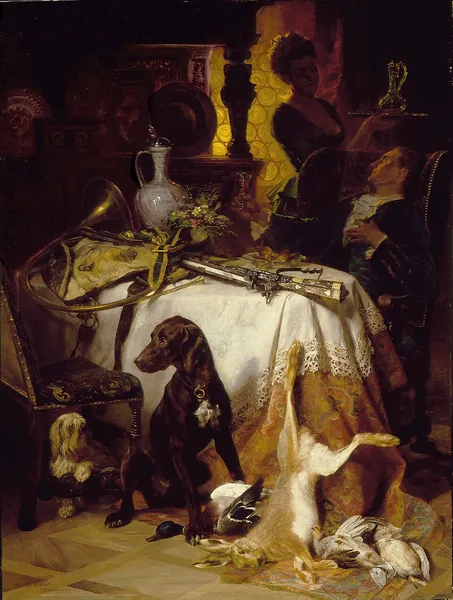
Cultural depictions of dogs in art have become more elaborate as individual breeds evolved and the relationships between human and canine developed. Hunting scenes were popular in the Middle Ages and the Renaissance. Dogs were depicted to symbolize guidance, protection, loyalty, fidelity, faithfulness, alertness, and love. As dogs became more domesticated, they were shown as companion animals, often painted sitting on a lady's lap. Throughout art history, mainly in Western art, there is an overwhelming presence of dogs as status symbols and pets in painting. The dogs were brought to houses and were allowed to live in the house. They were cherished as part of the family, and were regarded highly by the upper classes, who used them for hunting and could afford to feed them. Hunting dogs were generally connected to the aristocracy. Only the nobility were allowed to keep hunting dogs, and this would signal status. Dogs are unusual in Christian religious art, but the New Testament subject of the Exorcism of the Syrophoenician woman's daughter and the Old Testament one of Tobias and the Angel are exceptions, as they are mentioned in the texts, and depictions often include them. Dog portraits became increasingly popular in the 18th century, and the establishment of The Kennel Club in the United Kingdom of Great Britain and Ireland in 1873, and the American Kennel Club in 1884 introduced breed standards or 'word pictures', which further encouraged the popularity of dog portraiture.
Also on this shelf
Golden Age of Jewish culture in Spain.
14th Dalai Lama.
See also
Uncatalogued shelfText from Wikipedia; plate via Wikimedia Commons. Text CC BY-SA 4.0; plate freely licensed (see Commons). Source record. Images and catalogue data are reproduced from open-access collections.