Asian Art
Early modern period
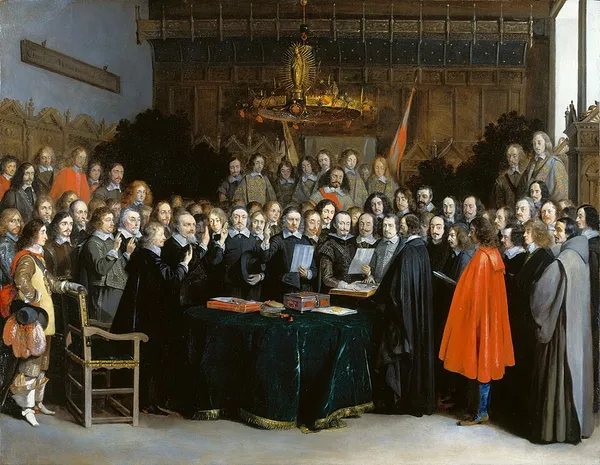
The early modern period, c. 1500 – c. 1800, is a historical period, with divisions based primarily on the history of Europe and the broader concept of modernity. There is no exact date that marks the beginning or end of the period and its extent may vary depending on the area of history being studied. In general, the early modern period is considered to have started at the beginning of the 16th or 17th century (c. 1500-c. 1600), and is variably considered to have ended at the 18th or 19th century (1700–1800). In a European context, it is defined as the period following the Middle Ages and preceding the advent of modernity, but there is no universal agreement on the dates of these boundaries. In the context of global history, the early modern period is often used in contexts where there is no equivalent "medieval" period. Various events and historical transitions have been proposed as the start of the early modern period, including the start of the Renaissance, the beginning of the printing revolution in the 1440s, the Fall of Constantinople in 1453, the Age of Discovery or the start of the Reformation. Its transition into the late modern period in the late 18th century was marked by the major developments brought about by the Industrial Revolution, the American Revolution, and the French Revolution (along with Napoleon's rise to power in France), followed by the second wave of modern colonization referred to as New Imperialism. Historians in recent decades have argued that, from a worldwide standpoint, the most important feature of the early modern period was the spread of globalization. From this viewpoint, the Columbian contact and its newfound notion of a New World being added to the Old World is another marker of the start of the period. New economies and institutions emerged, becoming more sophisticated and globally articulated over the course of the period. The early modern period also included the rise of the dominance of mercantilism as an economic theory. Other notable developments of the period include the Scientific Revolution, increasingly rapid technological progress, secularized civic politics, accelerated travel due to improvements in mapping and ship design, and by the strengthening of the administrative structures of monarchies and States in the process of formation.
Also on this shelf
Dharmaratna.
Dating creation.
See also
Uncatalogued shelfText from Wikipedia; plate via Wikimedia Commons. Text CC BY-SA 4.0; plate freely licensed (see Commons). Source record. Images and catalogue data are reproduced from open-access collections.