Asian Art
Dangbaekjeon
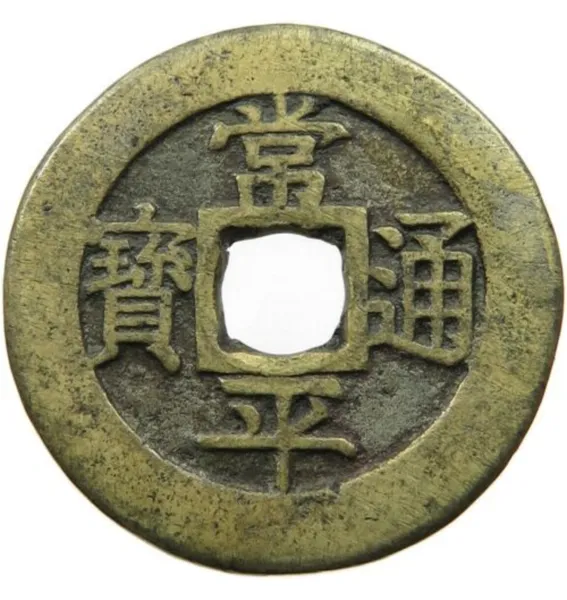
The Dangbaekjeon (Korean: 당백전; Hanja: 當百錢) refers to a series of cash coins that were used during late Joseon period of Korean history. It was first issued in November of the year 1866 (Gojong 3) by the order of Heungseon Daewongun. The hanja is inscribed on both sides of the coin. Words inscribed on the front side is Sangpyeong Tongbo (상평통보; 常平通寶), and on the back side, Hoe Dae Dang Baek (호대당백; 戶大當百). Hoe (호, 戶) stands for HoeJeo (호조, 戶曹), Joseon's ministry of revenue. Dae (대, 大) is a modifier which may be interpreted as 'the great'. Dang Baek (당백, 當百) means 'this coin worth 100 coins' in reference to the coins of 1 mun. As inscribed, it was worth 100 mun, which values it 100 times more than ordinary yeopjeon, and it would soon cause fatal inflation in the Joseon economy. It was lapsed in April 1867, after only 6 months of use.
Also on this shelf
Astor House Hotel (Shanghai).
Iron.
See also
Uncatalogued shelfText from Wikipedia; plate via Wikimedia Commons. Text CC BY-SA 4.0; plate freely licensed (see Commons). Source record. Images and catalogue data are reproduced from open-access collections.