Asian Art
Buddhism in Kerala
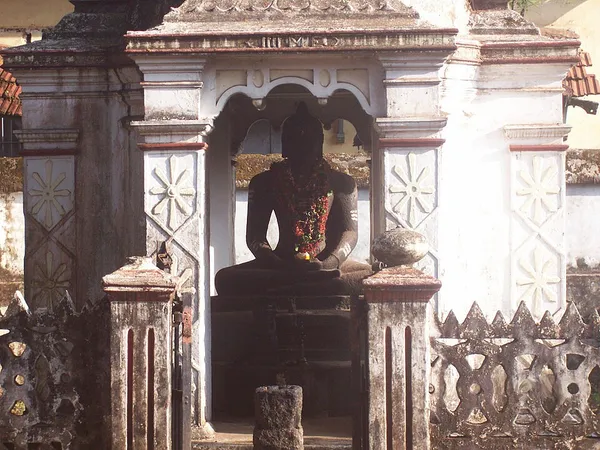
Although Buddhism in Kerala has almost disappeared, historians believe it was influential in pre-modern times, and its cultural impact is still visible in Kerala's culture. Direct evidence for a Buddhist presence in ancient Kerala during the Iron Age or early historic period is lacking; however, it is plausible that Buddhist ideas reached parts of Kerala connected by trade routes as early as the 3rd century BCE. Notably, a potsherd inscribed with the Brahmi graffiti 'sramana', dating to approximately the 2nd century CE, was discovered at the ancient port of Pattanam (North Paravur) in central Kerala. The medieval Tamil epic poem Manimekalai, associated with the Malabar Coast, contains detailed references to Buddhist philosophy and practices. Local traditions and relics further suggest a Buddhist presence, such as the Legend of Pallibana Perumal, who is believed to have converted to Buddhism and is associated with temples in the Kottayam and Alappuzha regions. Several prominent Hindu temples in present-day Kerala are thought to have originally been Buddhist shrines. In addition, a considerable number of Buddha images — mostly from the Alappuzha and Kollam regions — have been discovered across the state. A well-known Buddhist vihara, called Sri Mulavasa, is believed to have been located somewhere along the Alappuzha coast. Epigraphic and literary evidence indicates that this temple was patronised by local Kerala rulers, such as the Ay family and the Ezhimala rulers, during the early medieval period. In Kerala, Buddhism was largely absorbed into Hinduism, with many cultural practices — such as the Kuthirakettu and the Kettukazhcha — believed to be influenced by Buddhist traditions. Buddhism perhaps played a major role in promoting education and literacy in Kerala, with viharas serving as centres of learning. The widespread popularity of the traditional Ayurveda in Kerala is often regarded as a legacy of Buddhism. The celebrated Kerala poet Kumaran Asan (1871 – 1924) was strongly shaped by Buddhist philosophy, which is evident in his works Karuna, Chandala Bhikshuki, and Sri Buddha Charitham.
Also on this shelf
Chinese influences on Islamic pottery.
Birth of Mani.
See also
Uncatalogued shelfText from Wikipedia; plate via Wikimedia Commons. Text CC BY-SA 4.0; plate freely licensed (see Commons). Source record. Images and catalogue data are reproduced from open-access collections.