Asian Art
History of skiing
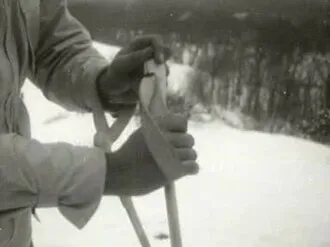
Skiing, or traveling over snow on skis, has a history of at least eight millennia. The geographic origins of skiing are disputed. Anthropologists and ski historians most commonly identify two proposed regions of origin: Scandinavia and the Altaic region of northern Asia. The earliest archaeological examples of skis were found in Karelia (a region in western Russia on the border with Finland) and date to 6000 BCE. Stone Age cliff paintings from the Altai Mountains in northwest China, dated to at least 4000 years old, depict hunters using primitive skis and are often cited as evidence that skiing may have independently developed in Central Asia. More recent research, summarized by Maurice Woehrle based on work by archaeologists Grigoriy Burlov and Hannu Takala, suggests that skiing began with the Kunda culture near the southeast shores of the Baltic, at the close of the last Glacial Maximum. In Scandinavia, there exists a long tradition of skiing for at least 5,000 years, which later influenced the development of skiing as a sport in Europe. By the Viking Age, both the Sámi and the Norse, who had become distinct peoples by the Bronze Age, were practicing skiing. Descendants of the Norse later formalized skiing techniques, contributing to the development of modern competitive skiing in Norway. By the mid-19th century, skiing became a popular recreational activity and sport. In the 20th century, it was practiced in snow-covered regions worldwide, providing a market for the development of ski resorts and their related communities.
Also on this shelf
Hunting with eagles.
Kuchi-e.
See also
Uncatalogued shelfText from Wikipedia; plate via Wikimedia Commons. Text CC BY-SA 4.0; plate freely licensed (see Commons). Source record. Images and catalogue data are reproduced from open-access collections.