Asian Art
Bengal famine of 1943
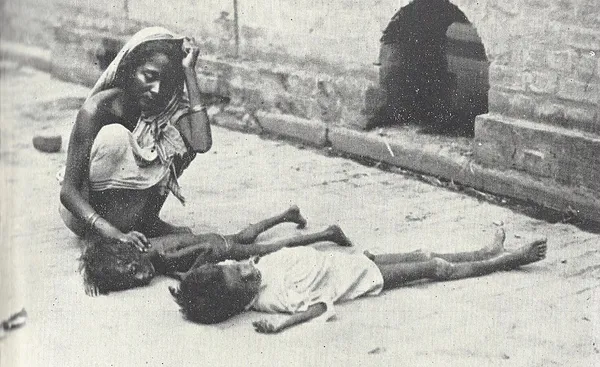
The Bengal famine of 1943 was a famine during World War II in the Bengal Province and Orissa Province of British India. An estimated 800,000–3.8 million people died, in the Bengal region (present-day Bangladesh and West Bengal), from starvation, malaria and other diseases aggravated by malnutrition, population displacement, unsanitary conditions, poor British wartime policies, and lack of health care. Millions were impoverished as the crisis overwhelmed large segments of the economy and catastrophically disrupted the social fabric. Eventually, families disintegrated; men sold their small farms and left home to look for work or to join the British Indian Army, and women and children became homeless migrants, often travelling to Calcutta or other large cities in search of organised relief. Bengal's economy had been predominantly agrarian at that time, with between half and three-quarters of the rural poor subsisting in a "semi-starved condition". Stagnant agricultural productivity and a stable land base were unable to cope with a rapidly increasing population, resulting in both long-term decline in per capita availability of rice and growing numbers of the land-poor and landless labourers. A high proportion laboured beneath a chronic and spiralling cycle of debt that ended in debt bondage and the loss of their landholdings due to land grabbing. The financing of military escalation led to wartime inflation. Many workers received monetary wages rather than payment in kind with a portion of the harvest. When prices rose sharply, their wages failed to follow suit; this drop in real wages left them less able to purchase food. During the Japanese occupation of Burma, many rice imports were lost as the region's market supplies and transport systems were disrupted by British "denial policies" for rice and boats (by some critiques considered a "scorched earth" response to the occupation). The British also implemented inflation policies during the war aimed at making more resources available for Allied troops. These policies, along with other economic measures, created the "forced transferences of purchasing power" to the military from ordinary people, reducing their food consumption.
Also on this shelf
Dating creation.
Bodhidharma.
See also
Uncatalogued shelfText from Wikipedia; plate via Wikimedia Commons. Text CC BY-SA 4.0; plate freely licensed (see Commons). Source record. Images and catalogue data are reproduced from open-access collections.