Asian Art
Empire of Japan
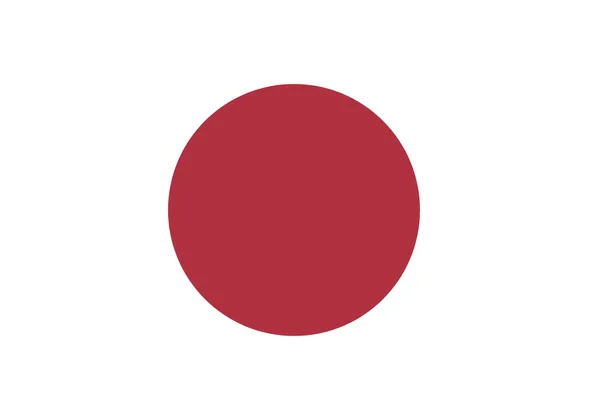
The Empire of Japan (Japanese: 大日本帝國/大日本帝国, Hepburn: Dai Nippon Teikoku/Dai Nihon Teikoku), also known as the Japanese Empire or Imperial Japan, was the period of Japanese history spanning 79 years, starting with the Meiji Restoration on 3 January 1868, and ending with ratification of the Constitution of Japan on 3 May 1947. From August 1910 to September 1945, it included mainland Japan, Okinawa, the Kurils, Karafuto, Korea, and Taiwan. The South Seas Mandate and concessions were de jure not internal parts of the empire but dependent territories. In the closing stages of World War II, with Japan defeated alongside the rest of the Axis powers, the formalized surrender was issued on 2 September 1945, in compliance with the Potsdam Declaration of the Allies, and the empire's territory subsequently shrunk to cover only mainland Japan. However, Okinawa was later returned to Japan in 1972. Under the slogans of "Enrich the Country, Strengthen the Armed Forces" and "Promote Industry" which followed the Boshin War and the restoration of power to the emperor from the shogun, Japan underwent a period of large-scale industrialization and militarization, often regarded as the fastest modernization of any country to date. Economic and political turmoil in the 1920s, including the Great Depression, led to the rise of militarism, nationalism, statism and totalitarianism, during which Japan joined the Axis alliance with Nazi Germany and Fascist Italy, conquering a large part of the Asia–Pacific; during this period, the Imperial Japanese Army (IJA) and the Imperial Japanese Navy (IJN) committed numerous atrocities and war crimes, including the Nanjing Massacre. There has been some debate over defining the political system of the Empire of Japan as a dictatorship, due to the absence of a dictator, as well as calling it fascist. Other suggested terms are para-fascism, militarism, corporatism, totalitarianism, and police state. The Imperial Japanese Armed Forces initially achieved large-scale military successes during the Second Sino-Japanese War and the Pacific War, most notably in the attack on Pearl Harbor in Hawaii on 7 December 1941. However, from 1942 onwards, and particularly after decisive Allied advances at Midway Atoll and Guadalcanal, Japan was forced to adopt a defensive stance against the United States.
Also on this shelf
1950s.
Japanese tea ceremony.
See also
Uncatalogued shelfText from Wikipedia; plate via Wikimedia Commons. Text CC BY-SA 4.0; plate freely licensed (see Commons). Source record. Images and catalogue data are reproduced from open-access collections.