Asian Art
Dim sum
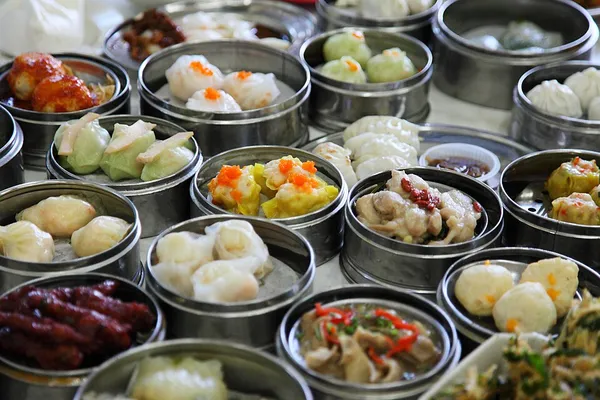
Dim sum (traditional Chinese: 點心; simplified Chinese: 点心; pinyin: diǎn xīn; Jyutping: dim2 sam1) is a large range of small Chinese dishes that are traditionally eaten in restaurants for brunch. Most modern dim sum dishes are commonly associated with Cantonese cuisine, although dim sum dishes also exist in a few other Chinese cuisines. In the tenth century, when the city of Canton (Guangzhou) began to experience an increase in commercial travel, many frequented teahouses for small-portion meals with tea called "yum cha" (brunch). "Yum cha" includes two related concepts. The first is "jat zung loeng gin" (Chinese: 一盅兩件), which translates literally as "one cup, two pieces". This refers to the custom of serving teahouse customers two delicately made food items, savory or sweet, to complement their tea. The second is dim sum, which translates literally to "touch the heart", the term used to designate the small food items that accompanied the tea. Teahouse owners gradually added various snacks called dim sum to their offerings. The practice of having tea with dim sum eventually evolved into the modern "yum cha". Cantonese dim sum culture developed rapidly during the latter half of the nineteenth century in Guangzhou. Cantonese dim sum was originally based on local foods. As dim sum continued to develop, chefs introduced influences and traditions from other regions of China. Cantonese dim sum has a very broad range of flavors, textures, cooking styles, and ingredients and can be classified into regular items, seasonal offerings, weekly specials, banquet dishes, holiday dishes, house signature dishes, and travel-friendly items, as well as breakfast and lunch foods and late-night snacks. Some estimates claim that there are at least two thousand types of dim sum in total across China, but only about forty to fifty types are commonly sold outside of China. There are over one thousand dim sum dishes originating from Guangdong alone, a total that no other area in China comes even close to matching. In fact, the cookbooks of most Chinese food cultures tend to combine their own variations on dim sum dishes with other local snacks. But that is not the case with Cantonese dim sum, which has developed into a separate branch of cuisine. Dim sum restaurants typically have a wide variety of dishes, usually totaling several dozen.
Also on this shelf
Economy of Taiwan.
Great Ming Treasure Note.
See also
Uncatalogued shelfText from Wikipedia; plate via Wikimedia Commons. Text CC BY-SA 4.0; plate freely licensed (see Commons). Source record. Images and catalogue data are reproduced from open-access collections.