Asian Art
Emakimono
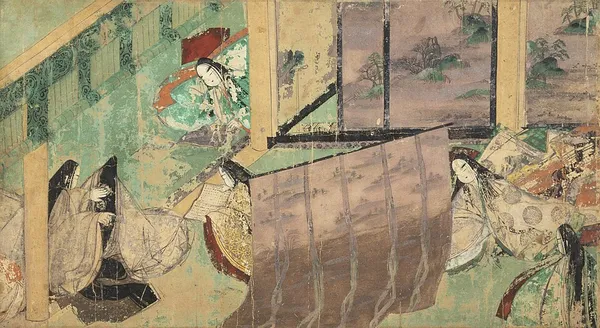
Emakimono (絵巻物, lit. 'picture scroll'; also emaki-mono) or emaki (絵巻) is an illustrated horizontal narration system of painted handscrolls that dates back to Nara-period (710–794 CE) Japan. Initially copying their much older Chinese counterparts in style, during the succeeding Heian (794–1185) and Kamakura periods (1185–1333), Japanese emakimono developed their own distinct style. The term therefore refers only to Japanese painted narrative scrolls. As in the Chinese and Korean scrolls, emakimono combine calligraphy and illustrations and are painted, drawn or stamped on long rolls of paper or silk sometimes measuring several metres. The reader unwinds each scroll little by little, revealing the story as seen fit. Emakimono are therefore a narrative genre similar to the book, developing romantic or epic stories, or illustrating religious texts and legends. Fully anchored in the yamato-e style, these Japanese works are above all an everyday art, centered on the human being and the sensations conveyed by the artist. Although the very first 8th-century emakimono were copies of Chinese works, emakimono of Japanese taste appeared from the 10th century in the Heian imperial court, especially among aristocratic ladies with refined and reclusive lives, who devoted themselves to the arts, poetry, painting, calligraphy and literature. During this period, the techniques of composition became highly accomplished, and the subjects were even more varied than before, dealing with history, religion, romances, and other famous tales. The patrons who sponsored the creation of these emakimono were above all the aristocrats and Buddhist temples. During the late Heian period, the Four Great Illustrated Handscrolls of Japan (Nihon Yondai Emaki) were produced. These include Ban Dainagon Ekotoba, Chōjū-jinbutsu-giga, Genji Monogatari Emaki, and Shigisan Engi Emaki. They are regarded as representative examples of the emakimono tradition and have all been designated as National Treasures of Japan. From the 14th century, the emakimono genre became more marginal, giving way to new movements born mainly from Zen Buddhism. Emakimono paintings mostly belong to the yamato-e style, characterized by its subjects from Japanese life and landscapes, the staging of the human, and an emphasis on rich colours and a decorative appearance.
Also on this shelf
Kanji.
Kawaguchi, Saitama.
See also
Uncatalogued shelfText from Wikipedia; plate via Wikimedia Commons. Text CC BY-SA 4.0; plate freely licensed (see Commons). Source record. Images and catalogue data are reproduced from open-access collections.