Asian Art
Catholic Church in China
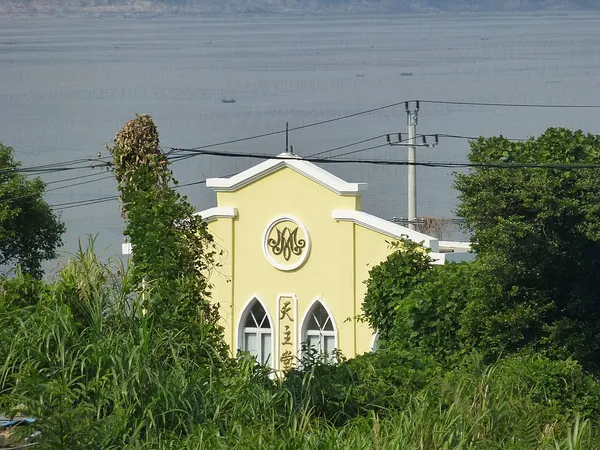
The Catholic Church (Chinese: 天主教; pinyin: Tiānzhǔ jiào; lit. 'Religion of the Lord of Heaven', after the Chinese term for the Christian God) first appeared in China upon the arrival of John of Montecorvino in China proper during the Yuan dynasty; he was the first Catholic missionary in the country, and would become the first bishop of Khanbaliq (1271–1368). The Jesuit Matteo Ricci was successful in Catholic missionary work in China. His approach viewed certain Confucian and Chinese folk practices as non-religious in nature and therefore compatible with Catholic practice. Other missionaries objected to this approach and after the hundred year long Chinese Rites controversy, the Vatican ordered the Jesuits to abandon the culturally accommodating approach Ricci had developed. After the Chinese Communist Party (CCP) won the Chinese Civil War, Catholic and Protestant missionaries were expelled from the country. In 1957, the CCP established the Chinese Catholic Patriotic Association (CCPA) in Beijing, which rejects the authority of the Holy See and appoints its own preferential bishops. Catholics in the People's Republic of China are divided between the official CCPA and an underground church that which sees itself as loyal to the Holy See and refuses to recognize government-appointed bishops. In September 2018, China and the Holy See reached a provisional agreement giving the Pope the power to veto any bishop which the Chinese government recommends. The parties have extended the provisional agreement twice, most recently in October 2024.
Also on this shelf
1768.
Finnish Civil War.
See also
Uncatalogued shelfText from Wikipedia; plate via Wikimedia Commons. Text CC BY-SA 4.0; plate freely licensed (see Commons). Source record. Images and catalogue data are reproduced from open-access collections.