Asian Art
Economy of Vietnam
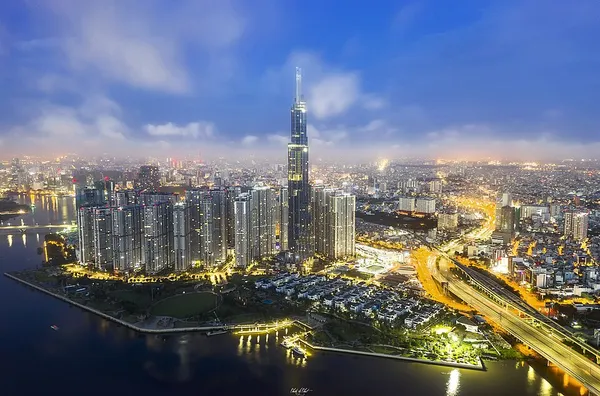
The economy of Vietnam is a developing mixed socialist-oriented market economy. It is the 33rd-largest economy in the world by nominal gross domestic product (GDP) and the 23rd-largest economy in the world by purchasing power parity (PPP). It is an upper-middle income country with a rising cost of living, specifically in urban areas like Ho Chi Minh City and Hanoi. Vietnam is a member of the Asia-Pacific Economic Cooperation, the Association of Southeast Asian Nations and the World Trade Organization. Since the mid-1980s, through the Đổi Mới reform period, Vietnam has made a shift from a highly centralized planned economy to a mixed economy. Before, South Vietnam was reliant on U.S. aid, while North Vietnam and reunified Vietnam relied on Soviet aid until the Soviet Union's dissolution. The economy uses both directive and indicative planning through five-year plans, with support from an open market-based economy. Over that period, the economy has experienced rapid growth. In the 21st century, Vietnam is in a period of being integrated into the global economy. Almost all Vietnamese enterprises are small and medium enterprises (SMEs). Vietnam has become a leading agricultural exporter and served as an attractive destination for foreign investment in Southeast Asia. According to a forecast by PricewaterhouseCoopers in February 2017, Vietnam may be the fastest-growing of the world's economies, with a potential annual GDP growth rate of about 5.1 percent, which would make its economy the 10th-largest in the world by 2050. Vietnam has also been named among the so-called Next Eleven and CIVETS countries.
Also on this shelf
Bertrand Russell.
Eijudō Hibino at Seventy-one (Toyokuni I).
See also
Uncatalogued shelfText from Wikipedia; plate via Wikimedia Commons. Text CC BY-SA 4.0; plate freely licensed (see Commons). Source record. Images and catalogue data are reproduced from open-access collections.