Asian Art
Betel nut chewing
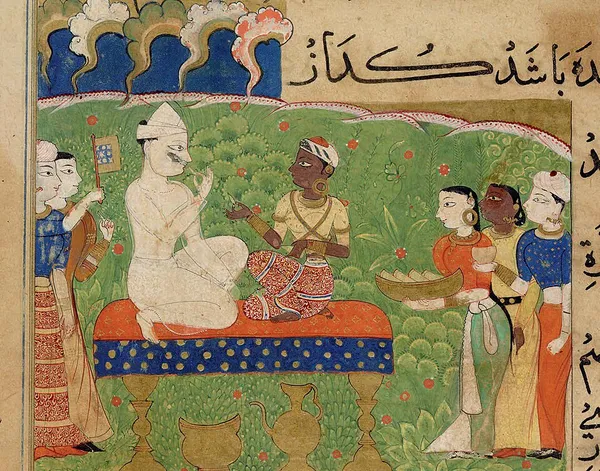
Betel nut chewing, also called betel quid chewing or areca nut chewing, is a practice in which areca nuts (also called "betel nuts") are chewed together with slaked lime and betel leaves for their stimulant and narcotic effects, the primary psychoactive compound being arecoline. The practice is widespread in Southeast Asia, Micronesia, Island Melanesia, and South Asia. It is also found among both Han Chinese immigrants and indigenous peoples of Taiwan, Madagascar, and parts of southern China. It was introduced to the Caribbean in colonial times. The preparation combining the areca nut, slaked lime, and betel (Piper betle) leaves is known as a betel quid (also called paan or pan in South Asia), but the exact composition of the mixture varies geographically. It can sometimes include other substances for flavoring and to freshen the breath, like coconut, dates, sugar, menthol, saffron, cloves, aniseed, cardamom, and many others. The areca nut can be replaced with tobacco or the two chewed together, and the betel leaves can be excluded. In West Papua, the leaf may be replaced with stem and inflorescence of the Piper betle plant. The preparation is not swallowed but is spat out after chewing. Chewing results in permanent red stains on the teeth after prolonged use. The spit from chewing betel nuts, which also results in red stains, is often regarded as unhygienic and an eyesore in public facilities in certain countries. Betel nut chewing is addictive and causes adverse health effects, mainly oral and esophageal cancers, and cardiovascular disease. When chewed with additional tobacco in its preparation (like in gutka), there is an even higher risk, especially for oral and oropharyngeal cancers. With tobacco it also raises the risk of fatal coronary artery disease, fatal stroke, and adverse reproductive effects including stillbirth, premature birth and low birth weight. The practice of betel nut chewing originated in Southeast Asia, where the plant ingredients are native. The earliest evidence for use of the areca nut is older than any evidence for the quid: two pre-agricultural foragers from the Indonesian island of Sulawesi, one dated to between 25,000 and 16,000 BP and the other to between 7,600 and 6,300 BP, show tooth wear and traces of arecoline in their teeth attributable to the habitual sucking of whole nuts, without lime or leaf.
Also on this shelf
Harari people.
History of the Jews in Panama.
See also
Uncatalogued shelfText from Wikipedia; plate via Wikimedia Commons. Text CC BY-SA 4.0; plate freely licensed (see Commons). Source record. Images and catalogue data are reproduced from open-access collections.