Asian Art
Buddhist architecture
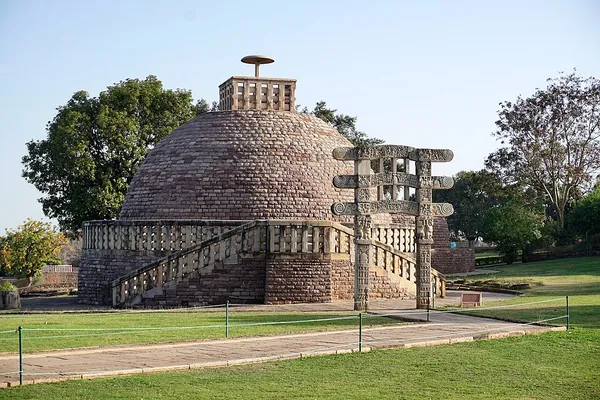
Buddhist architecture is the architectural style that adheres to the philosophy and religious practices of Buddhism. The origins of Buddhism date back to the 5th century BCE in the Indian subcontinent. Buddhist architectural forms were developed to serve monastic, ritual, and commemorative functions. Distinctive features such as stupas, vihāras (monasteries), and chaityas (prayer halls) are often seen in Buddhist temples. As Buddhism spread throughout and beyond South Asia, its architectural traditions evolved and diversified, leading to a wide range of regional adaptations across Southeast Asia and East Asia. It has been argued that certain stylistic features of Buddhist architecture, particularly the stupa, may have been influenced by elements from Hindu temple architecture, such as the shikhara. Over time, these forms evolved into the pagoda, a prominent architectural feature seen throughout the Indosphere and East Asia
Also on this shelf
Bronze Age sword.
Bao Zheng.
See also
Uncatalogued shelfText from Wikipedia; plate via Wikimedia Commons. Text CC BY-SA 4.0; plate freely licensed (see Commons). Source record. Images and catalogue data are reproduced from open-access collections.